
Last updated October 15, 2026
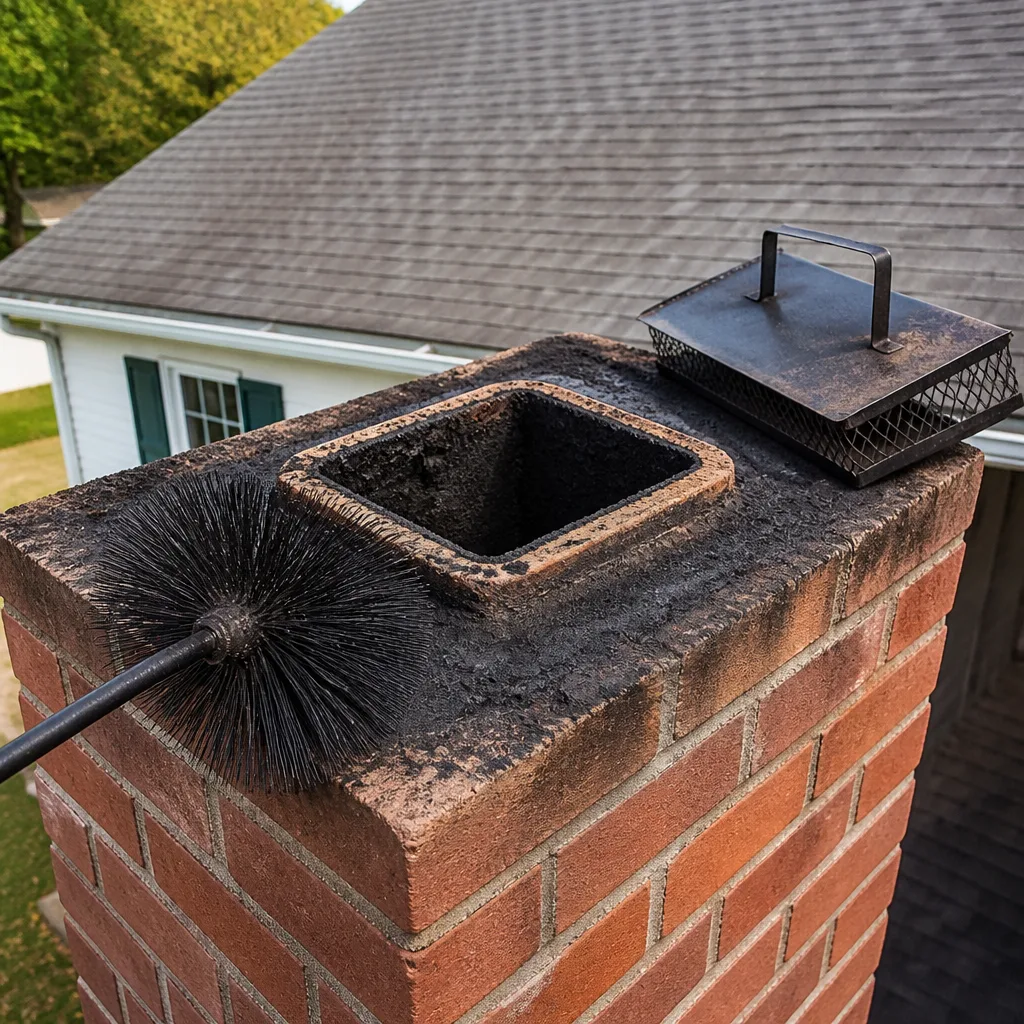 Sweep & inspection
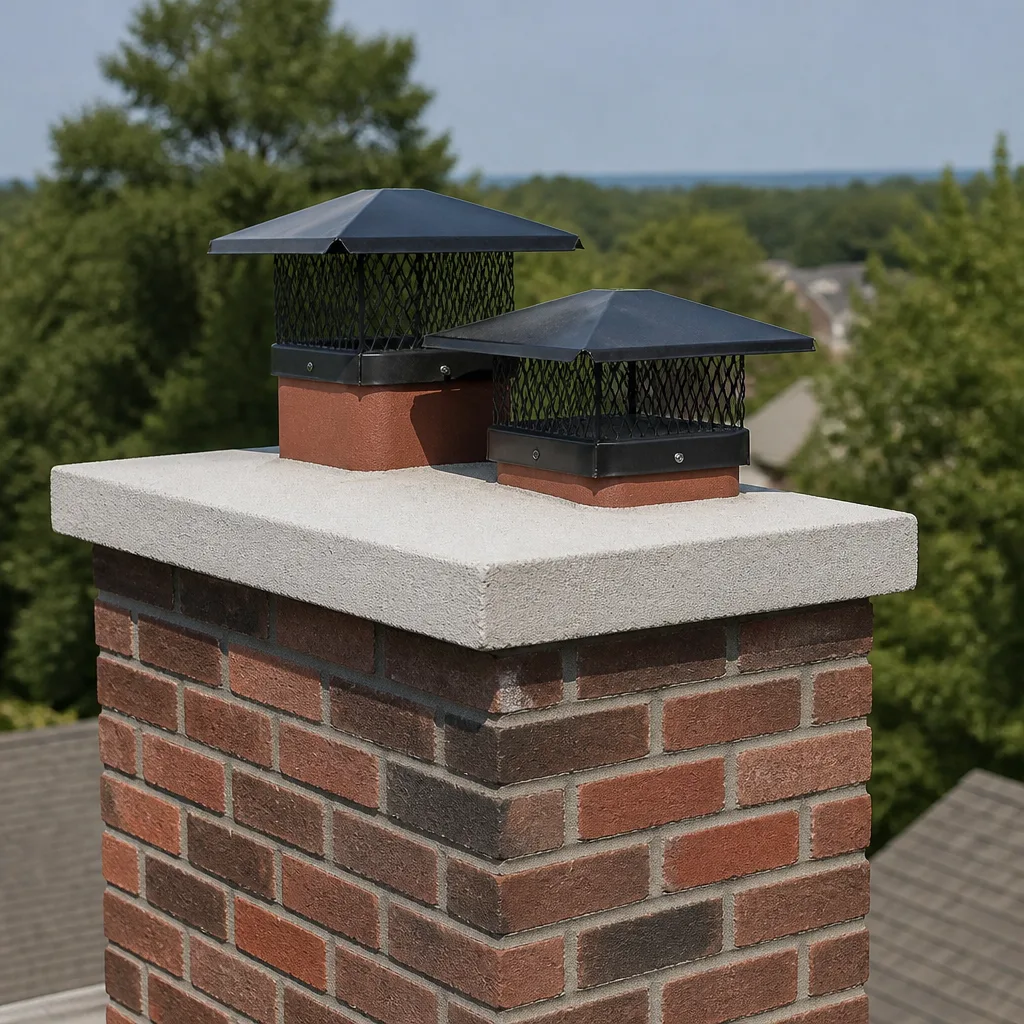 Caps & crowns
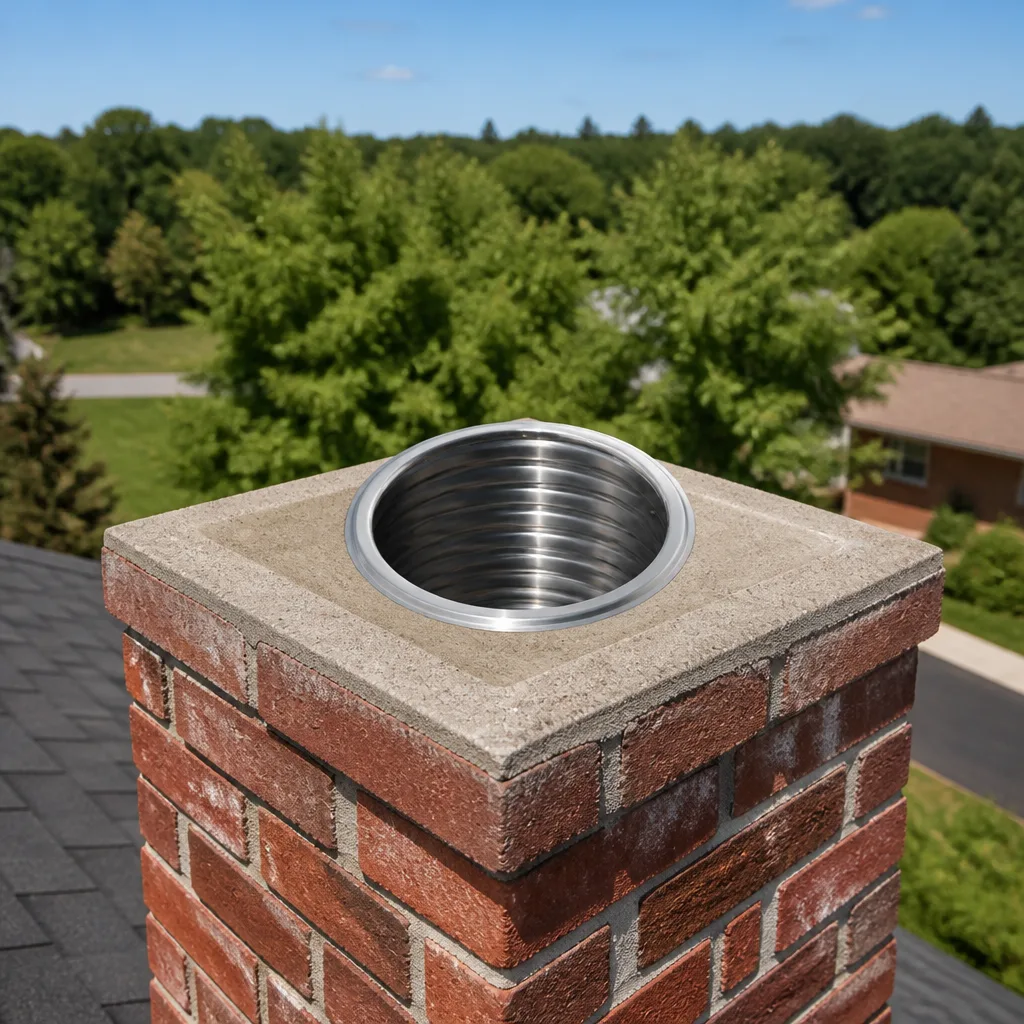 Flue relining
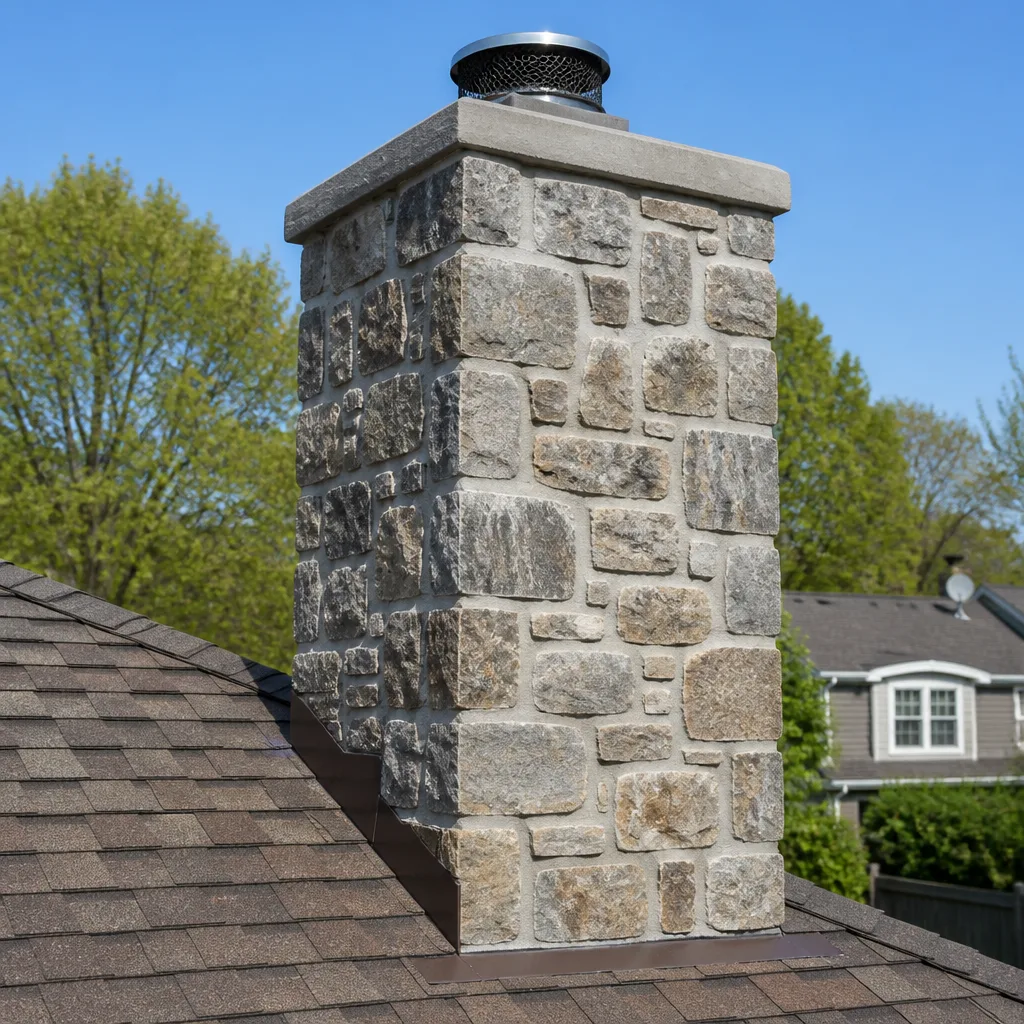 Masonry repair
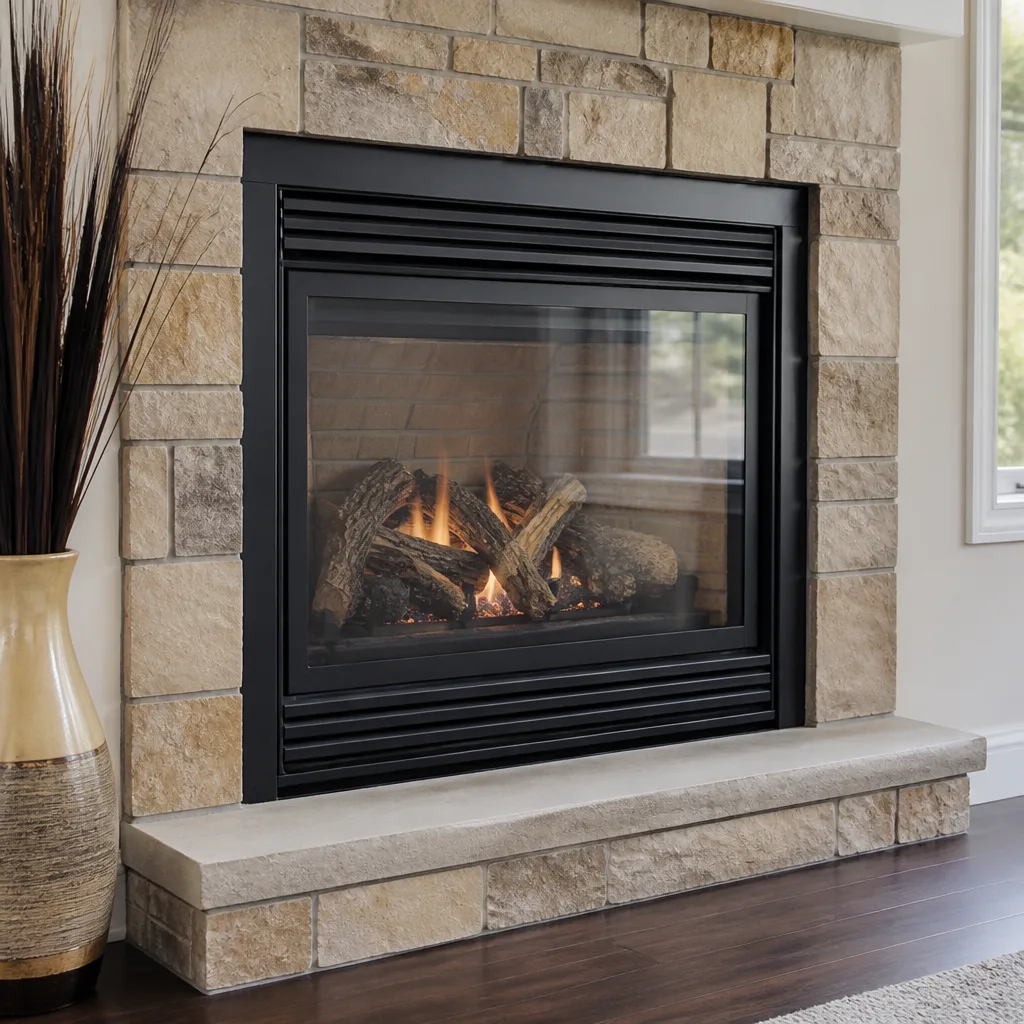 Gas fireplace service
Level 1 sweep and inspection to the NFPA 211 annual standard - flue, crown, cap, and flashing checked and photographed
Chimney sweep logs do not sweep chimneys. They loosen some creosote - which then falls where a brush and vacuum still have to collect it.
DIY vs Professional Chimney Cleaning: The Riverside Homeowner’s Decision Guide
A chimney cleaning brush removes what you can see. But the two conditions that cause most chimney fires – cracked flue liners and stage-2 creosote – are invisible to a homeowner standing at the firebox opening, no matter how thorough the brushing is. This guide gives Riverside homeowners a clear, honest framework for deciding when a do-it-yourself sweep is reasonable and when the diagnostic capability of a professional matters more than the labor of cleaning itself. For how to hire a chimney cleaning contractor in Riverside, see our step-by-step guide.
We’ll walk through exactly what a DIY kit can and cannot accomplish, what a professional actually does beyond running a brush, and how Riverside’s specific burn patterns, wildlife, and seasonal wind debris affect the right choice for your system.
Quick Answer
DIY chimney cleaning is a reasonable option for a simple, well-maintained masonry fireplace in Riverside IF you burn seasoned hardwood, sweep at least once a season, and have had a professional inspection within the last two years. But a DIY brush kit cannot identify cracked flue liners, stage-2 or stage-3 creosote, or damper sealing problems – the three issues that turn a routine cleaning into a safety problem. If your flue has not been professionally inspected in over three years, or if you have noticed any smoke rolling back into the room, the honest answer is that no amount of brushing will tell you what you actually need to know.
Styles & brands we work with
Table of Contents
- What a DIY Chimney Cleaning Actually Does (and What It Can’t)
- The Diagnostic Gap: Why a Brush Is Not an Inspection
- When DIY Chimney Cleaning Makes Sense in Riverside
- When Professional Cleaning Is Non-Negotiable
- Real Cost Comparison: DIY vs Professional in Riverside
- How Riverside’s Climate and Wildlife Affect Your Decision
- The Three-Question Riverside Self-Assessment
- What a Professional Visit Actually Includes
What a DIY Chimney Cleaning Actually Does (and What It Can’t)
Let’s be direct about this: a $40 to $80 chimney sweep kit from a hardware store can remove loose soot from the firebox and the first several feet of flue. If you own a ranch-style home in the Wood Streets or Canyon Crest with a straight, unlined masonry chimney and you burn seasoned oak once or twice a week during Riverside’s short winter season, a careful DIY sweep before the burning season is genuinely achievable. The brush knocks down powdery soot, the vacuum picks up what falls into the firebox, and you’ve addressed the visible issue.
Here is what a rod-and-brush kit does well:
- Removes loose, powdery soot from flue walls in a straight chimney run.
- Clears minor ash buildup in the firebox and smoke shelf in a simple system.
- Lets you see the firebox and damper area at eye level, which is useful for spotting obvious debris from a past storm.
Here is what the same kit cannot do:
- Identify a cracked flue liner. A hairline crack in a clay tile liner is not visible from the firebox opening, and a brush will not catch on it. You will not know it exists until smoke or heat escapes into the chimney chase or adjacent framing.
- Distinguish stage-1 from stage-2 creosote. Stage-1 is flaky and brushable. Stage-2 is a tar-like glaze that adheres to flue walls and resists mechanical brushing. Stage-3 is a hardened, shiny coating that can require chemical treatment or removal with specialized rotary tools. A homeowner with a brush cannot tell the difference reliably.
- Assess damper sealing. A damper that no longer seats properly allows conditioned air to escape year-round and can pull carbon monoxide from a gas water heater or furnace back into the living space. A brush does not test this.
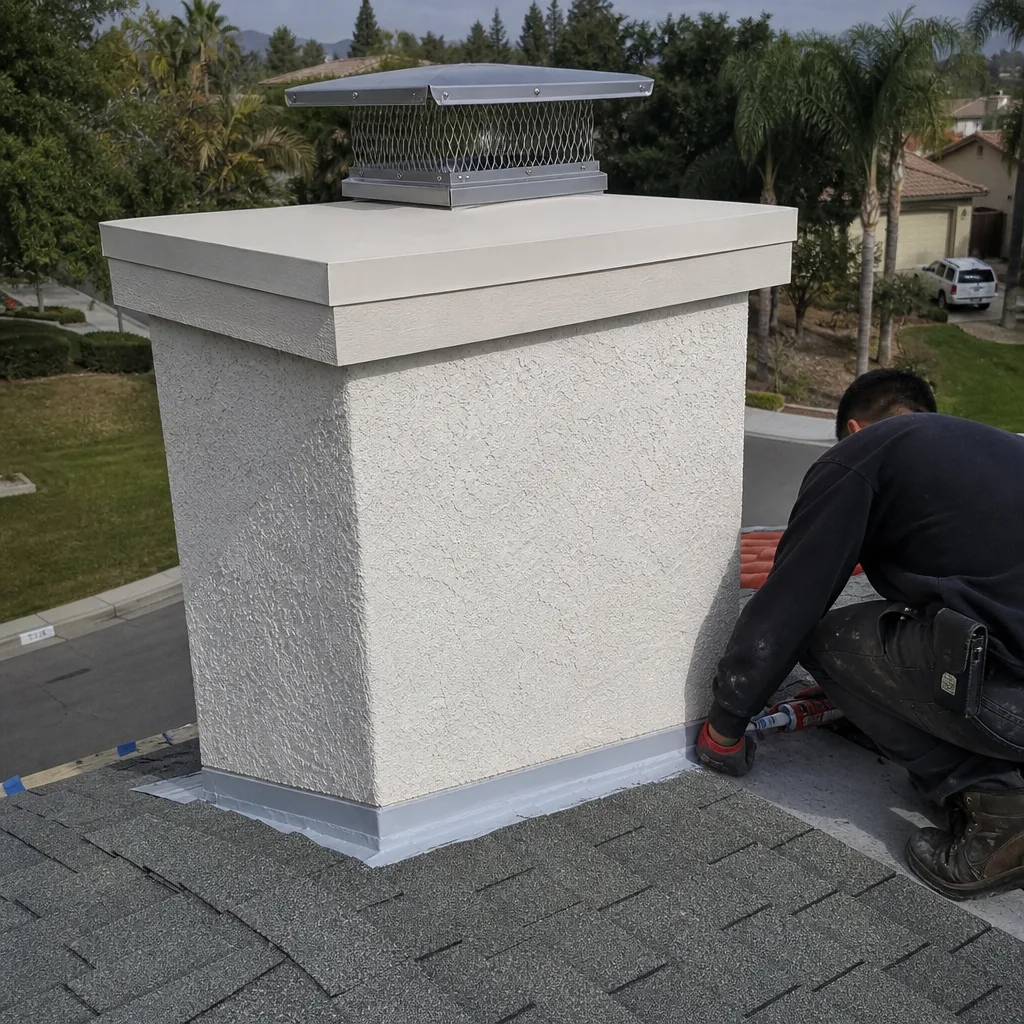
- Evaluate the chimney crown and cap. In Riverside, where chimney crowns crack from summer UV exposure and winter temperature swings, a deteriorating crown lets water into the flue and can accelerate liner damage. You need to be on the roof to assess this, and even then, small cracks are easy to miss without experience.
The honest summary: a DIY cleaning addresses what you can reach and see. It does not address what actually fails.
The Diagnostic Gap: Why a Brush Is Not an Inspection
The core argument for professional chimney sweep service in Riverside is not really about labor. It’s about diagnostic capability. A trained technician arrives with more than a brush. They arrive with a camera system, a creosote classification methodology, and the experience to spot problems that a homeowner has no context for recognizing.
Here is what happens during a professional sweep that does not happen during a DIY session:
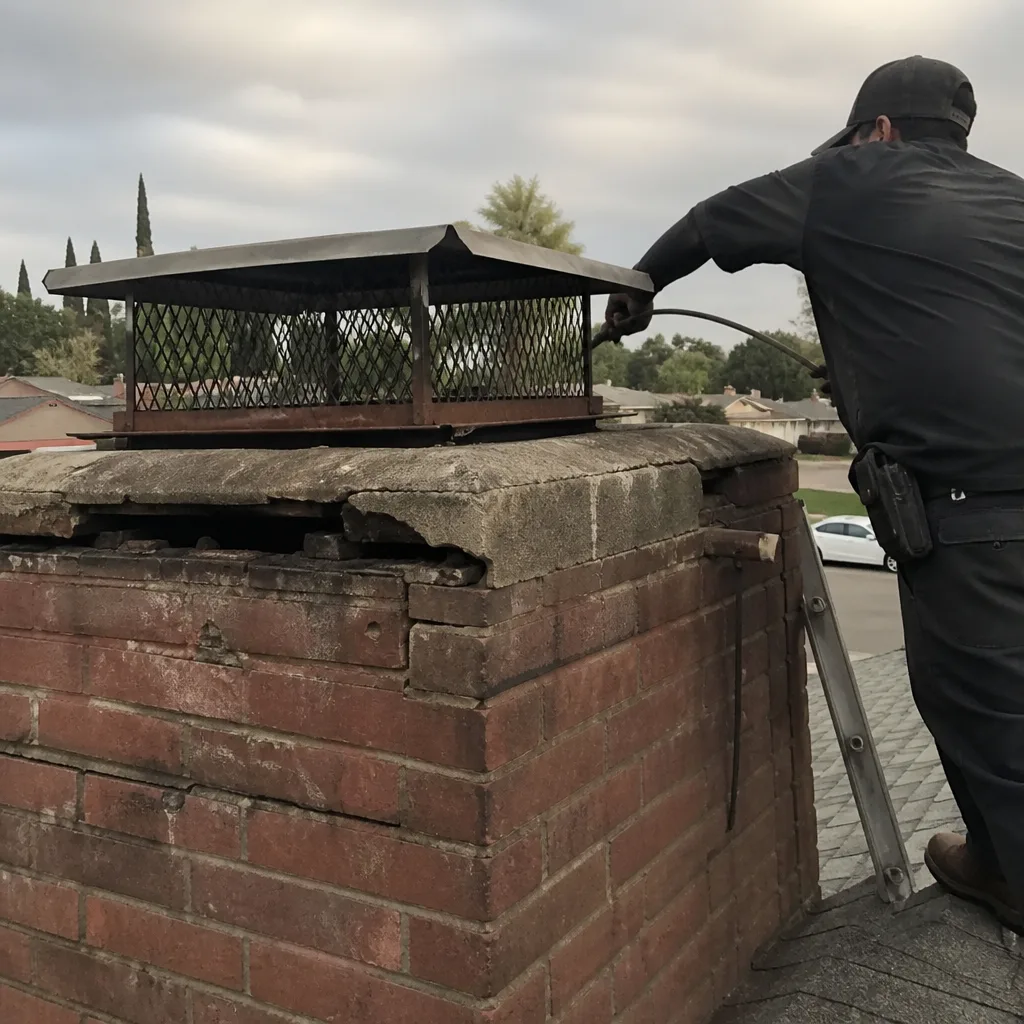
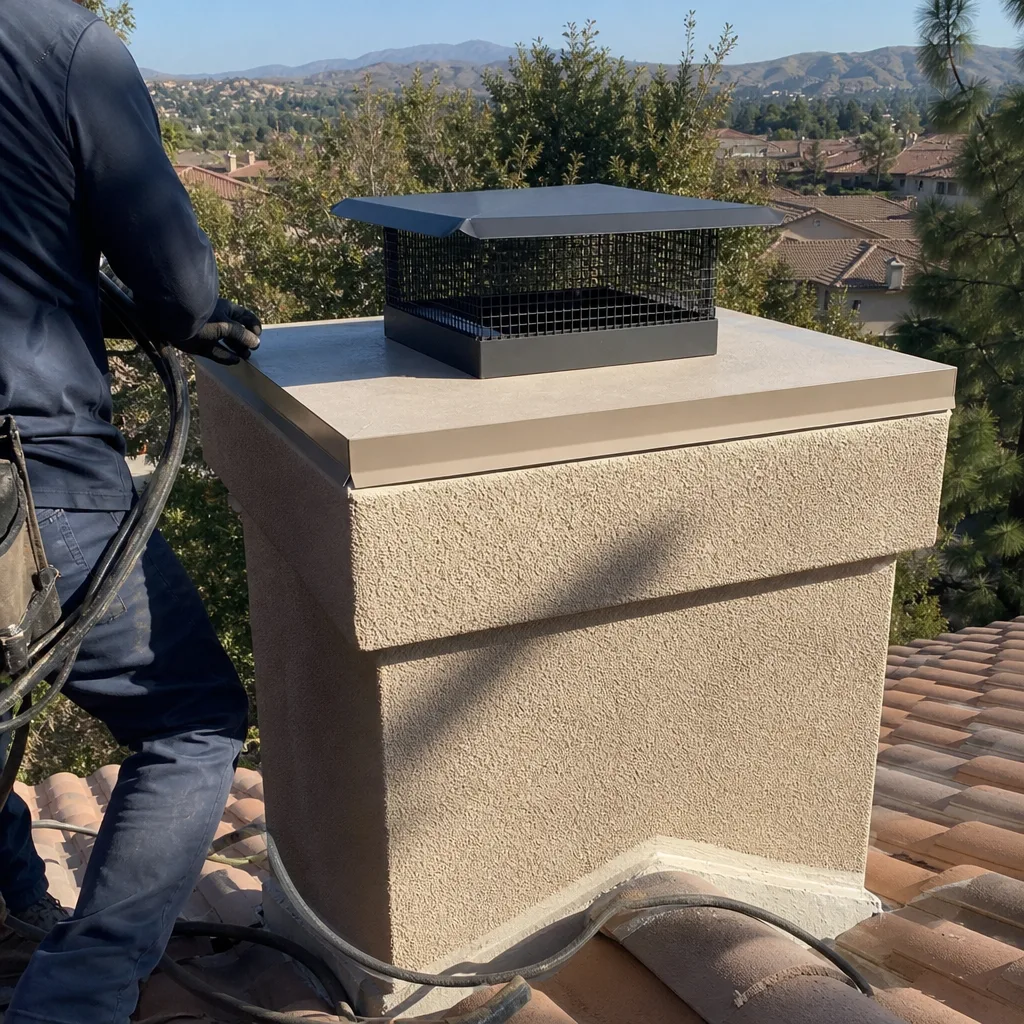
- Visual inspection from the roof. The technician examines the chimney crown, cap, flashing, and mortar joints before any cleaning begins. Riverside’s summer heat dries out crown mortar, and Santa Ana winds can loosen cap hardware. These are fixable problems when caught early and expensive problems when ignored.
- Interior camera inspection. A small camera on a flexible line travels the full flue length and records what the walls actually look like. This is how we catch cracked clay liners, deteriorated mortar joints between tiles, and creosote glaze that a brush alone would not remove.
- Creosote staging. The technician identifies whether the creosote is stage-1 (brushable), stage-2 (tar glaze requiring chemical treatment such as a product from Gelco), or stage-3 (hardened and concentrated, sometimes requiring rotor cleaning or a liner assessment). The right treatment depends on the correct staging.
- Damper and draft testing. A technician checks whether the damper opens and closes fully, whether it seats properly when closed, and whether the chimney draws correctly with a small smoke test.
- Appliance safety check. If your chimney vents a gas water heater or furnace, the technician checks for the specific risks associated with gas venting: condensation, corrosion, and soot that can signal incomplete combustion.
The brush removes soot. The professional chimney inspection in Riverside tells you whether the system is safe to operate at all. Those are different tasks, and only one of them is visible from the living room floor.
When DIY Chimney Cleaning Makes Sense in Riverside
We’re not going to tell you that every chimney needs a professional every time. That would be dishonest. There are Riverside homes where a careful DIY cleaning between professional visits is a perfectly reasonable practice. Here are the conditions where we would say a DIY approach is acceptable:
- Your flue was professionally inspected within the last two years and the inspector found no structural issues, no stage-2 or stage-3 creosote, and no damper problems.
- You burn seasoned hardwood only. In Riverside, that typically means oak or almond wood that has dried for at least 12 months. Green or partially seasoned wood produces the cool, smoky fires that accelerate creosote formation.
- You burn infrequently. If you light a fire ten to fifteen times per season, your creosote accumulation will be minimal. If you burn every weekend from November through March, you’re producing enough creosote that professional staging matters.
- Your chimney is a simple, straight masonry flue. No offsets, no bends, no factory-built metal chimney system where specific brush types and techniques are required to avoid damaging the liner.
- You see no warning signs. No smoke rollback into the room, no strong odor from the fireplace in summer, no visible creosote flakes larger than a dime falling into the firebox.
If you meet all five conditions, a careful DIY sweep with a properly sized brush and a shop vacuum is a reasonable maintenance step. It does not replace professional inspection on its regular interval, but it stretches the time between visits.
When Professional Cleaning Is Non-Negotiable
Some conditions make professional service mandatory, not optional. We’ll be specific about this. Here are the situations where you should not attempt a DIY cleaning in Riverside, and why:
- Your flue has not been professionally inspected in over three years. You’re not just cleaning an unknown system – you’re operating a system whose condition you have no verified information about. The margin for error is a house fire, and no homeowner can assess that risk from the firebox opening.
- You’ve experienced smoke rollback. Any smoke entering the living space during normal operation signals a draft or blockage problem. It could be a nest (Riverside’s rooftop wildlife includes pigeons, starlings, and squirrels – all of which nest in uncapped chimneys), a collapsed flue section, or a chimney that’s undersized for the appliance it serves. Brushing will not solve these problems.
- Your chimney vents a gas appliance. If a gas water heater or gas furnace vents through the same chimney, the system has different safety requirements than a wood-only flue. Gas appliances produce acidic condensation, and a cracked liner serving a gas appliance is a carbon monoxide risk, not just a fire risk. This is not a scenario where a hardware store brush kit is appropriate.
- You see shiny, tar-like creosote inside the flue. If the creosote has the consistency of dried molasses or appears glossy, you’re looking at stage-2 or stage-3 creosote. This material resists hand brushing and can require chemical treatment with professional-grade products like those from Gelco. Attempting to remove it with a brush will leave most of it in place while giving you a false sense of completion.
- You smell a strong fireplace odor during Riverside’s summer months. That’s usually the sign of creosote or moisture accumulating in the flue during the months the fireplace sits unused. It’s also a sign that air is moving through the chimney when the damper should be sealing it off.
Each of these conditions requires a trained eye and, in some cases, a repair before the system is safe to operate. No DIY kit on the shelf at a Riverside hardware store can tell you which condition you have.
Real Cost Comparison: DIY vs Professional in Riverside
The cost conversation about DIY chimney cleaning usually starts and ends with the kit price. That’s the wrong framing. Here is the actual cost comparison for a Riverside homeowner, including what nobody adds to the DIY column:
DIY Chimney Cleaning: What You Actually Pay
- Brush kit with rods: $40 to $80 for a basic setup sized for a standard masonry flue.
- Drop cloths and plastic sheeting: $15 to $25, because soot gets everywhere if you’re not careful.
- Shop vacuum rental or purchase: $30 to $60 if you don’t already own one, plus you’ll want a fine-dust filter because standard filters blow soot right back into the room.
- Your time: Plan for two to four hours for a first-time DIYer, including setup, the actual sweeping, clean-up of firebox and living space, and disposal of soot and creosote.
- Disposal: Creosote is not something you can just bag and toss in the Riverside city waste bin without checking local regulations. Many homeowners end up taking it to a household hazardous waste collection event, which adds another hour or two.
Subtotal: roughly $85 to $165 in hard costs plus three to six hours of your time.
Professional Chimney Sweep: What You Actually Pay
Most standard chimney sweeps in the Riverside market run between $180 and $340 depending on the system type, accessibility, and whether the flue requires chemical treatment. For a full breakdown, see our Chimney Cleaning Cost Breakdown: The Riverside Homeowner’s Reference for 2026. The price includes:
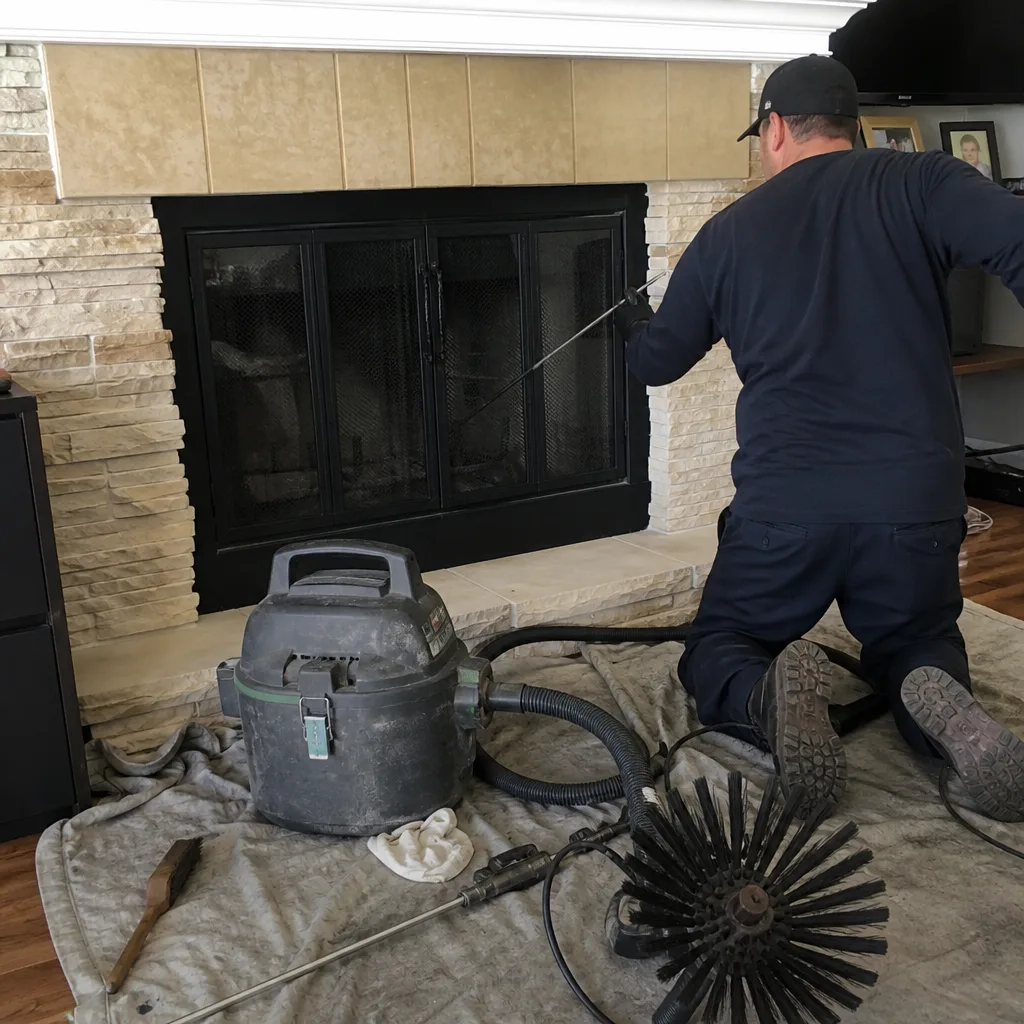
- The full interior sweep with professional-grade brushes and vacuum equipment.
- A camera inspection of the flue interior.
- Creosote staging and documentation.
- Damper and draft verification.
- Floor protection (shoe covers and drop cloths) and clean-up.
- The diagnostic findings in a report you can reference later.
The Hidden Cost Nobody Puts in the DIY Column
Here’s the line item that changes the math: a missed diagnostic finding. If your flue liner has a crack that a DIY sweep doesn’t catch, and you keep using the fireplace for another year, the eventual repair is more expensive than if it had been caught early. A small crown crack that costs a few hundred dollars to seal becomes a liner replacement that costs thousands. The DIY route didn’t save you money – it deferred the only information you actually needed.
Beyond the dollars, think about the inside of your Riverside home. A professional crew arrives with the equipment to keep soot contained: drop cloths, fine-dust vacuums, and a process that leaves the living room as clean as it was when they arrived. If you have kids or pets, that’s worth accounting for in a way a spreadsheet doesn’t capture.
How Riverside’s Climate and Wildlife Affect Your Decision
Riverside’s burn season is short compared to mountain communities like Big Bear or Idyllwild. Most households burn from late October through early March, and many burn far less than that. On the surface, that suggests low creosote accumulation and a DIY-friendly profile. But Riverside has other factors that complicate the picture. Our Seasonal Chimney Cleaning Care for Riverside covers year-round maintenance in detail.
Wildlife and Debris
Riverside’s year-round bird and squirrel population means uncapped or under-capped chimneys routinely get nests and debris. The Santa Ana winds, which blow through the Inland Empire from October through January, deposit leaves, twigs, and sometimes significant debris onto rooftops and into chimney caps. That debris dries in the low-humidity air and becomes kindling sitting directly above your firebox.
A professional inspection catches this. A DIY sweep from the firebox upward often misses what’s sitting on the smoke shelf or lodged in the cap, because the homeowner never goes on the roof.
Summer Heat and Chimney Crowns
Riverside regularly sees summer temperatures above 100°F, and the UV exposure on a masonry chimney crown is severe. Crown mortar expands and contracts through the seasons, and after enough years, cracks form. Once water penetrates the crown and gets into the flue, it accelerates liner deterioration and can cause spalling – the flaking of brick faces that Riverside homeowners often see on older chimneys in the Magnolia Center and Arlington neighborhoods.
This is a Riverside-specific problem that affects whether your chimney is safe to use, and it’s invisible from the firebox. A brush kit doesn’t help you here.
Low Burn Frequency and Creosote Type
There’s a counterintuitive fact about low burn frequency: it doesn’t necessarily mean less risk. When Riverside homeowners burn occasionally, they often light a fire on a cold evening, let it burn for a few hours, and then close the damper before the fire has fully died. This creates the cool, smoldering conditions that produce stage-1 and stage-2 creosote more readily than a hot, fully established fire. The total volume may be lower than a mountain home’s accumulation, but the creosote type can be stickier and more adhesive relative to the amount of burning.
So the Riverside homeowner’s risk profile is not simply “we burn less, so we need less service.” It’s more nuanced: moderate creosote accumulation, seasonal debris loading, and UV-damaged crowns are the specific failure modes we see most.
The Three-Question Riverside Self-Assessment
If you’re trying to decide between a DIY cleaning and calling a professional this season, start with these three questions. Answer them honestly, and the right path becomes clear.
- Do I have verified knowledge of my flue’s condition from the last two years? If the answer is yes – meaning you have a written report from a professional inspection that found no structural issues – DIY cleaning between professional visits is reasonable. If the answer is no, or if your last inspection was over three years ago, the diagnostic gap is too large to responsibly clean on your own.
- Have I observed any warning signs this season? Smoke rollback, persistent odor in summer, visible shiny creosote, falling debris, or a damper that no longer operates smoothly are each a reason to call a professional. If you’ve seen none of these, your system is statistically likelier to be in a state where DIY cleaning is safe.
- What is actually failing in this system? This is the question that reframes the whole DIY debate. A brush addresses soot, and soot is rarely the thing that causes a fire or a carbon monoxide event. The things that cause those events are cracked liners, stage-2 or stage-3 creosote, and damper failures – none of which you can diagnose from the firebox. If you can’t answer what’s actually failing, the honest choice is an inspection, not a brush kit.
If you answer these and find yourself in the professional column, there’s no shame in that. The point of this guide is not to push anyone toward spending more money. If you want more guides & resources on chimney care, visit our blog. The point is to be honest about the limits of what a homeowner with a hardware store kit can actually know and do.
What a Professional Visit Actually Includes
Since we’ve spent a lot of time talking about what DIY can’t do, let’s be specific about what a professional visit from Kindling does, so you know what you’re paying for. This is not a pitch – it’s a list of what happens when a trained chimney technician works in your Riverside home.
The C.A.R.E. Values on Every Visit
Every Kindling Riverside chimney service visit follows the C.A.R.E. values, which are the practical protections that matter when a crew works inside a home with kids and pets:
- C – Clean-up promise: Shoe covers go on at the door, drop cloths cover the floor from the entry to the fireplace, and a photo of the finished clean-up is taken before the crew leaves. You see the proof before we go.
- A – Ask before moving: Nothing is moved without asking. Furniture stays where you put it. The team works around your space, not through it.
- R – Respectful process: Uniformed, background-checked technicians who explain what they’re doing and answer questions before the work starts.
- E – Exact written price: A written price is delivered before any work begins. No on-the-spot pressure, no surprise add-ons.
What the Sweep Itself Covers
A standard sweep from Kindling includes the full interior brushing and vacuuming of the flue, the smoke shelf, and the firebox. The technician then performs the diagnostic work we’ve described: camera inspection, creosote staging, damper and draft verification, and a report on the chimney’s condition. If the camera reveals a cracked liner, the technician will show you the image and explain your options, which may include liner repair products from HeatShield or a stainless steel liner from DuraFlex where a full replacement is needed.
We use pet-safe products where there is a choice, and the equipment is run at reasonable hours. If you have a sleeping baby or a skittish dog, tell the office when you book and the team will work with that in mind.
The 365-Day Done Right Promise
Every sweep, inspection, and fireplace repair in Riverside from Kindling stands behind the 365-Day Done Right Promise. If the work isn’t right, we make it right. No fine print, no runaround. That promise covers the craftsmanship of the sweep and the clean-up. If you find soot in the living room after a visit, or if something wasn’t done to standard, call us and we’ll address it.
Common Mistakes to Avoid
- Assuming a straight chimney means a clean sweep. Even a straight masonry flue can have stage-2 creosote glaze, a cracked liner tile, or debris accumulation on the smoke shelf. Straight geometry doesn’t guarantee clean walls.
- Using a brush without a proper vacuum setup. Soot is fine enough to become airborne and settle throughout the house. A standard shop vacuum without a HEPA or fine-dust filter will blow it back into the living room. Riverside homes with central heating often have active return ducts that pull soot particles into the HVAC system.
- Cleaning an uncapped chimney from below. If your chimney has no cap or screen, you can count on some kind of debris – leaves, twigs, or a nest – having accumulated since it was last inspected. Cleaning from the firebox alone will push that material into the flue, not remove it.
- Skipping the smoke shelf. The smoke shelf, just above the damper, is where the largest creosote chunks and debris collect. DIY rods rarely bend to reach this area, and it’s often the most flammable part of the system during a chimney fire.
- Venting a gas appliance through a wood-cleaned flue without an inspection. If your home has a gas water heater or furnace sharing the chimney, the flue needs to be evaluated for gas-specific issues even if the wood side looks clean. This is a Riverside-specific risk because many older homes in neighborhoods like Casa Blanca and Arlanza have shared flues for multiple appliances.
- Cleaning a chimney you’ve never seen from the roof. If you’ve never been on your roof or don’t know the condition of your crown, cap, and flashing, you’re cleaning a system whose exterior you understand incompletely. Riverside’s UV exposure and Santa Ana debris make exterior inspection a meaningful part of the safety picture.
- Assuming one DIY sweep replaces the need for any professional involvement. DIY cleaning between professional inspections is a maintenance strategy, not a safety strategy. The inspection is the thing that keeps you safe; the brushing is the thing that keeps the chimney efficient.
See the difference
 Before
 After
After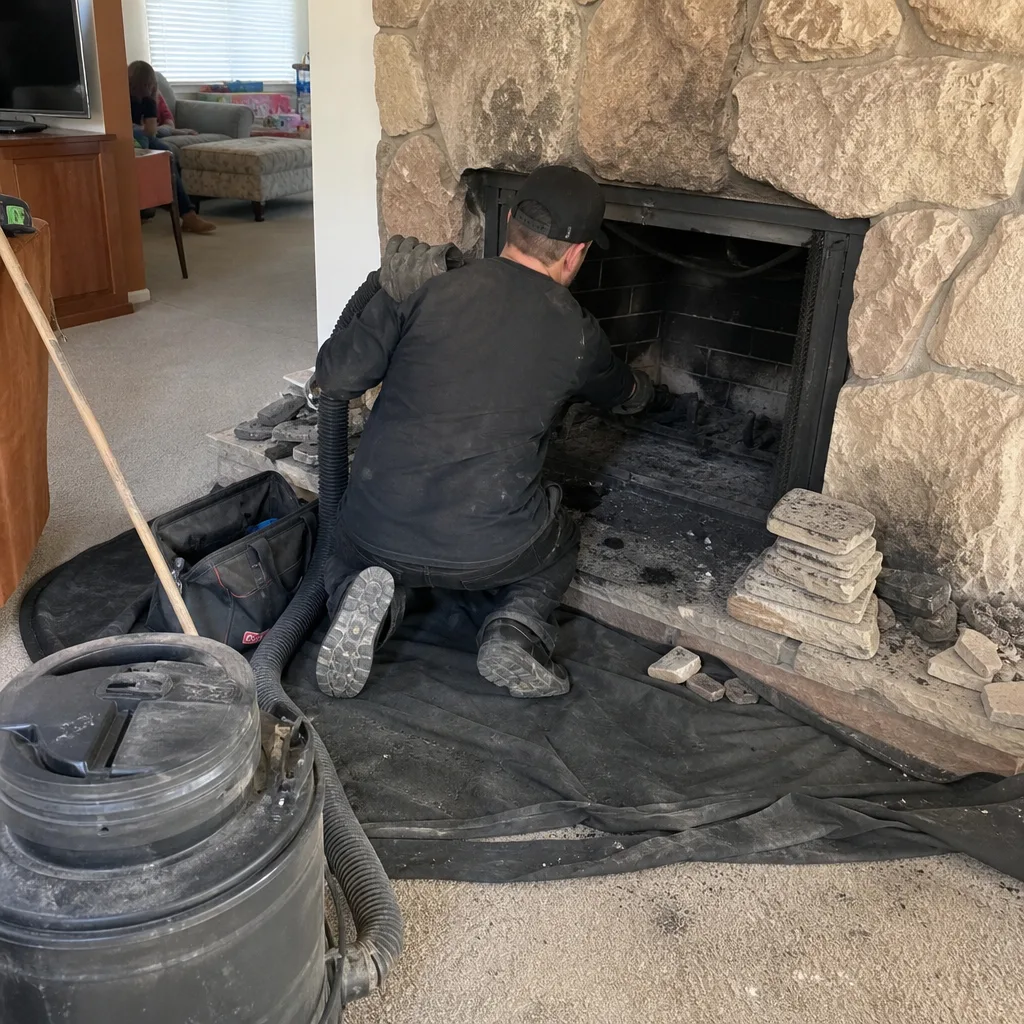 Before
 After
After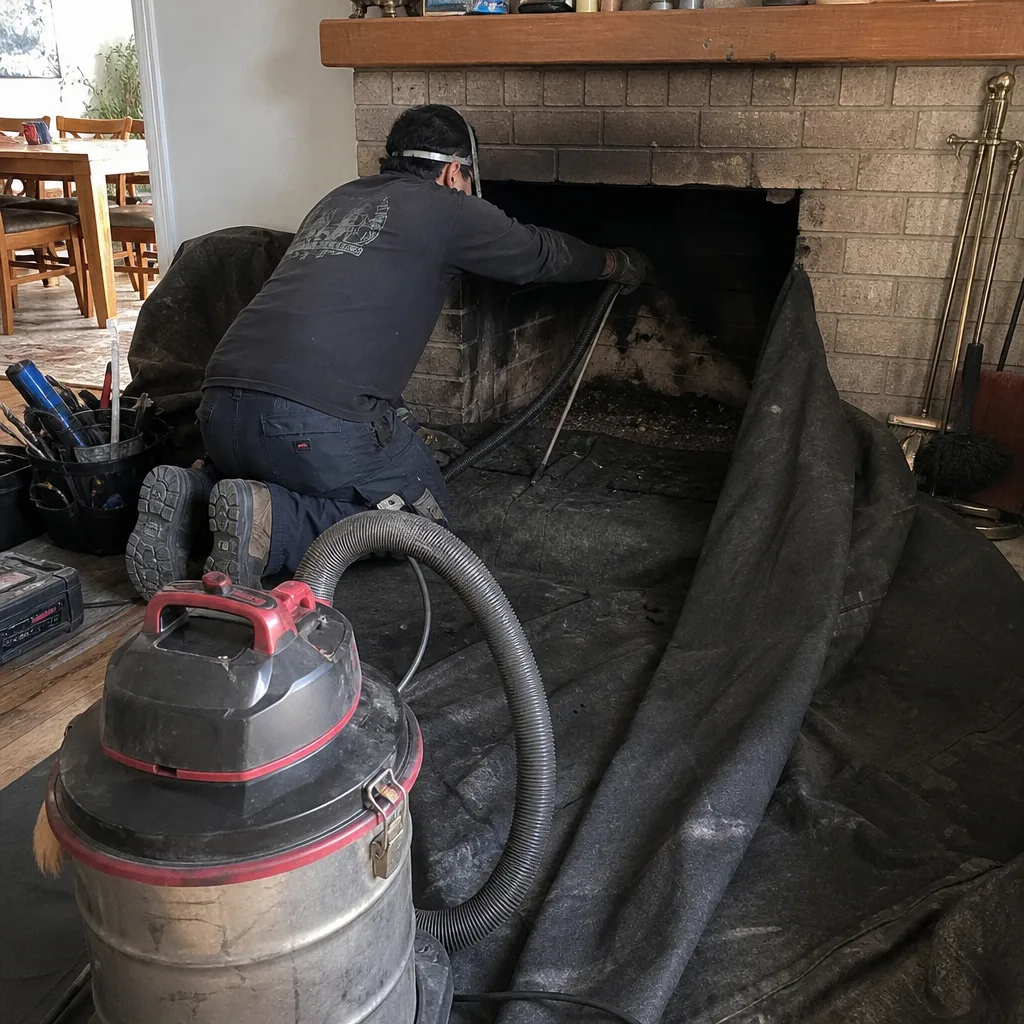 Before
 After
AfterWhen to Call a Professional
If any of these are true for your Riverside home, call before you burn again: your last professional inspection was over three years ago, you’ve seen smoke enter the living space, your chimney vents a gas appliance and has never been evaluated for gas-specific risks, you see shiny or tar-like creosote inside the firebox, or you smell a strong fireplace odor during the summer months. Each of these conditions requires a trained eye and, in some cases, a repair before safe operation resumes.
Kindling Chimney Riverside offers free estimates in Riverside. Call (831) 218-8547 and a live person will answer, 24 hours a day, 7 days a week – no voicemail trees, no callbacks that come days later. We’ll schedule a sweep and inspection, deliver a written price before any work begins, and protect your floors and air quality while we’re in the house.
Frequently Asked Questions
Most standard chimney sweeps in the Riverside market run between $180 and $340, depending on system type, flue height, and whether the creosote requires chemical treatment. The price includes the interior sweep, a camera inspection, damper and draft verification, and full clean-up with floor protection. Call (831) 218-8547 for an exact quote for your system – estimates are free and the written price is delivered before any work begins.
DIY chimney cleaning can be safe for a simple, well-maintained masonry flue that has been professionally inspected within the last two years, provided you use the right brush size, protect the room from soot, and work carefully. What DIY cleaning cannot do is identify the conditions that cause chimney fires and carbon monoxide events: cracked liners, stage-2 or stage-3 creosote, and damper failures. Those require a camera inspection by a trained professional.
The National Fire Protection Association recommends a professional inspection at least once a year, with a sweep performed whenever creosote accumulation exceeds 1/8 inch. In Riverside, where most households burn from late October through early March, an annual inspection typically identifies whether a sweep is needed. Homes that burn every weekend may need a sweep every season; homes that burn a few times a winter may go two years between sweeps but still benefit from the annual diagnostic inspection.
You should never accept a liner replacement recommendation without seeing camera evidence of the existing liner’s condition. A cracked clay tile liner should be visible on the inspection footage, and a reputable company will show you the image and explain exactly what they’re seeing. At Kindling, we show you the camera images before recommending any repair, and we’ll tell you plainly when work can safely wait. If a company recommends a liner replacement without camera documentation, get a second opinion.
Skipping a cleaning allows creosote to accumulate on the flue walls. Stage-1 creosote is brushable, but if it’s left long enough to progress to stage-2 or stage-3, it becomes a glaze or coating that is significantly harder to remove and substantially more flammable. A chimney fire burns when enough creosote accumulates to ignite from a single spark or ember. Separately, skipping the inspection that accompanies a professional cleaning means missing cracks and damper problems that worsen with each year of use.
You should not clean a shared flue with a brush kit without first having it professionally evaluated, because gas appliances present different risk factors than wood-only systems. Gas combustion produces acidic condensation that can corrode liners, and a cracked liner serving a gas appliance is a carbon monoxide concern rather than a fire concern. If your Riverside home has a gas water heater or furnace sharing the chimney, call (831) 218-8547 and we’ll evaluate the full system before any cleaning is scheduled.
The Bottom Line
The DIY versus professional chimney cleaning debate comes down to one question, and it’s not about money. It’s about information. A brush kit removes soot, and soot removal is achievable for a careful homeowner in a simple system. But the conditions that actually endanger a Riverside home – cracked flue liners, stage-2 creosote, damper failures, UV-damaged crowns, and seasonal wildlife debris – are invisible from the firebox opening. Only a camera inspection by a trained professional can tell you whether your chimney is safe to use. If your flue has been inspected within the last two years and you see no warning signs, a careful DIY sweep between professional visits is reasonable. If not, the most honest thing you can do is call (831) 218-8547 and get the information before you light another fire.
Written by Danny Cortes, Owner at Kindling Chimney Riverside, serving Riverside since 2003.