
Last updated October 15, 2026
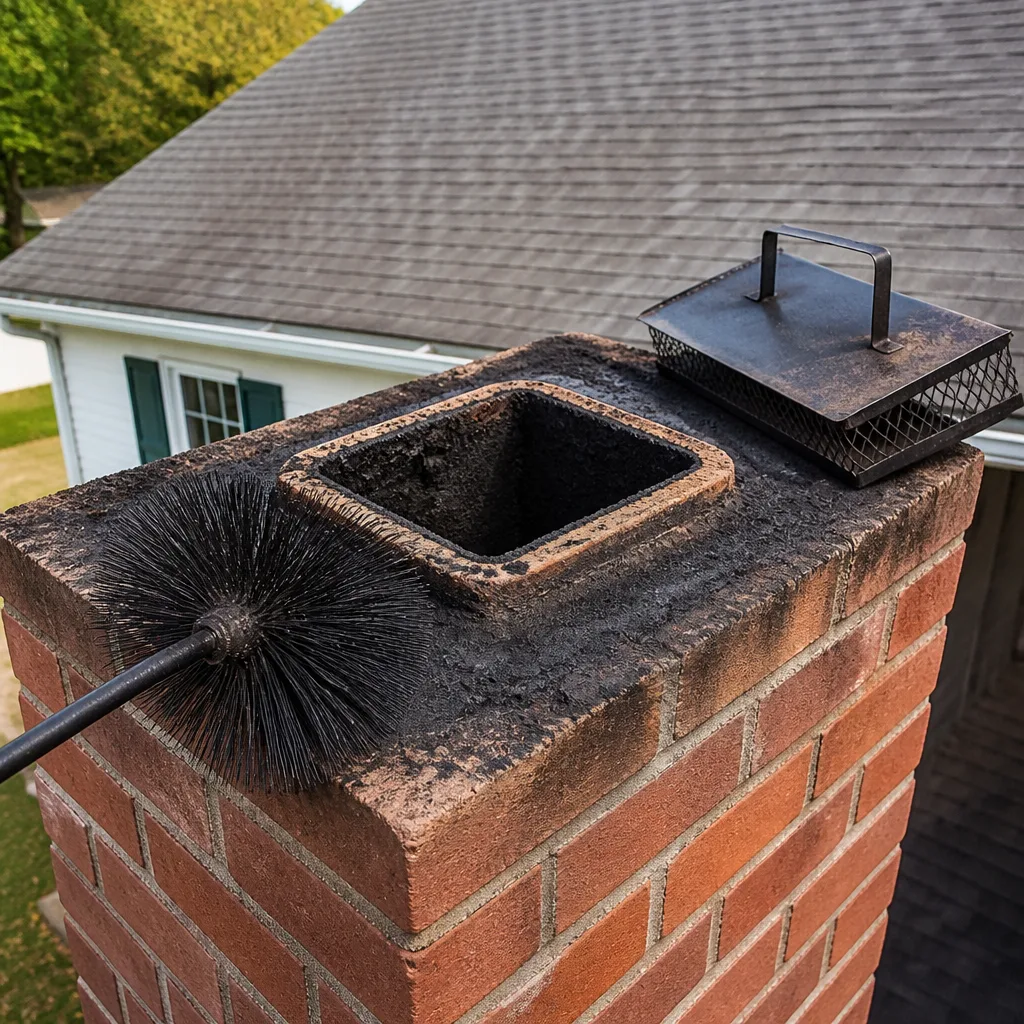 Sweep & inspection
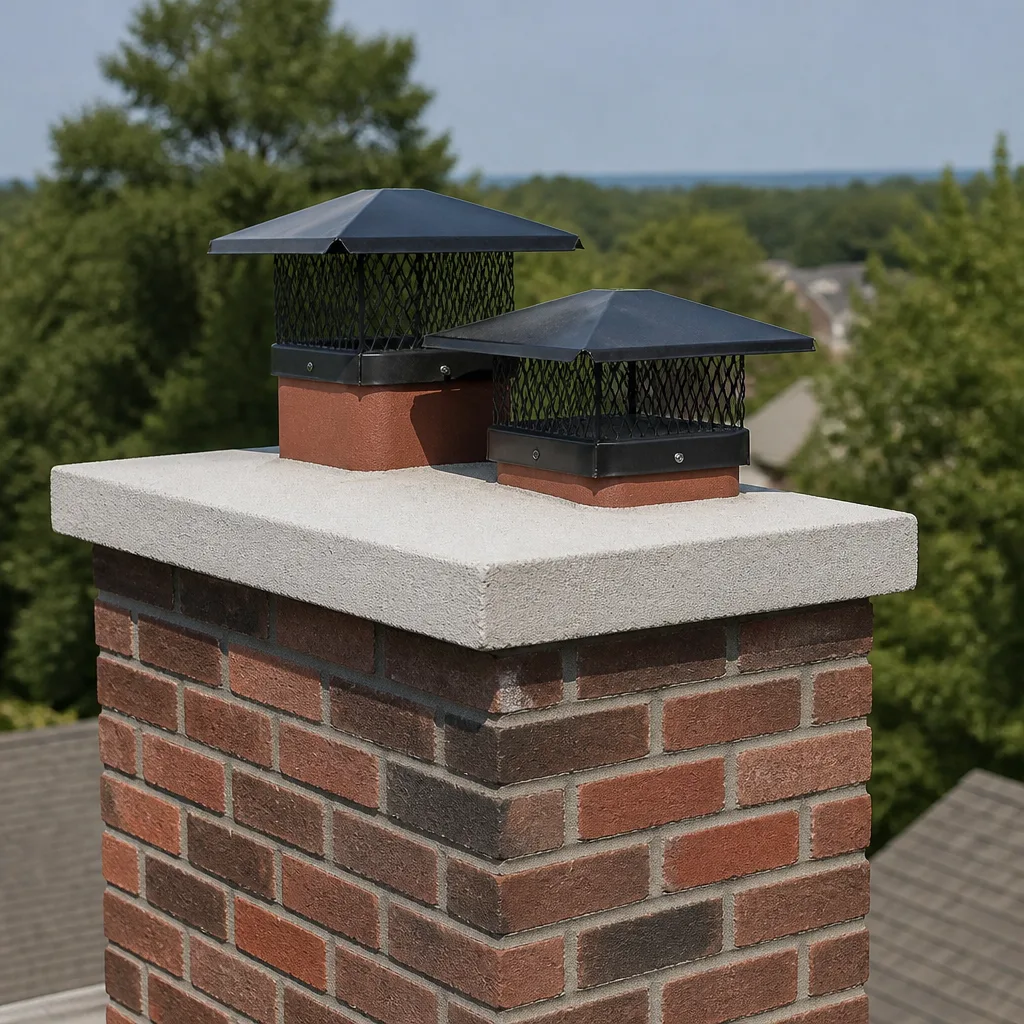 Caps & crowns
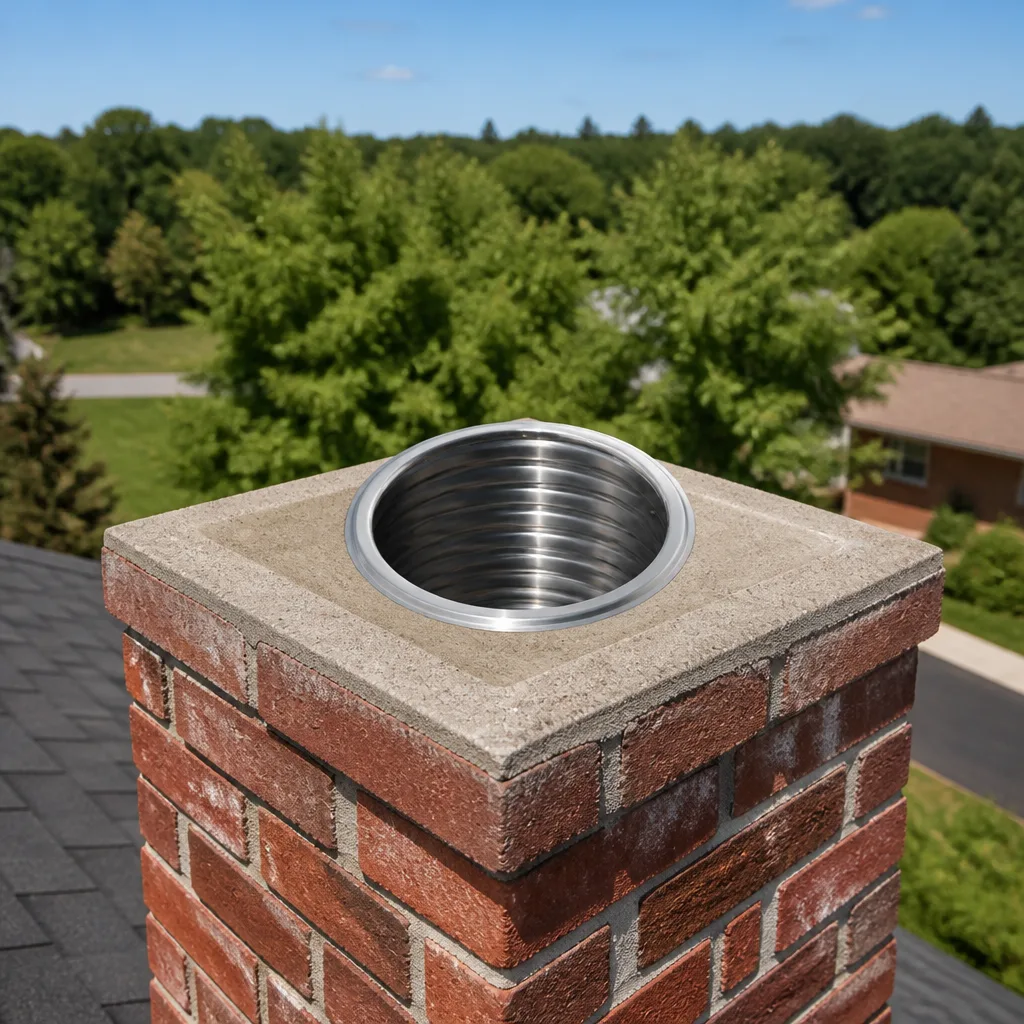 Flue relining
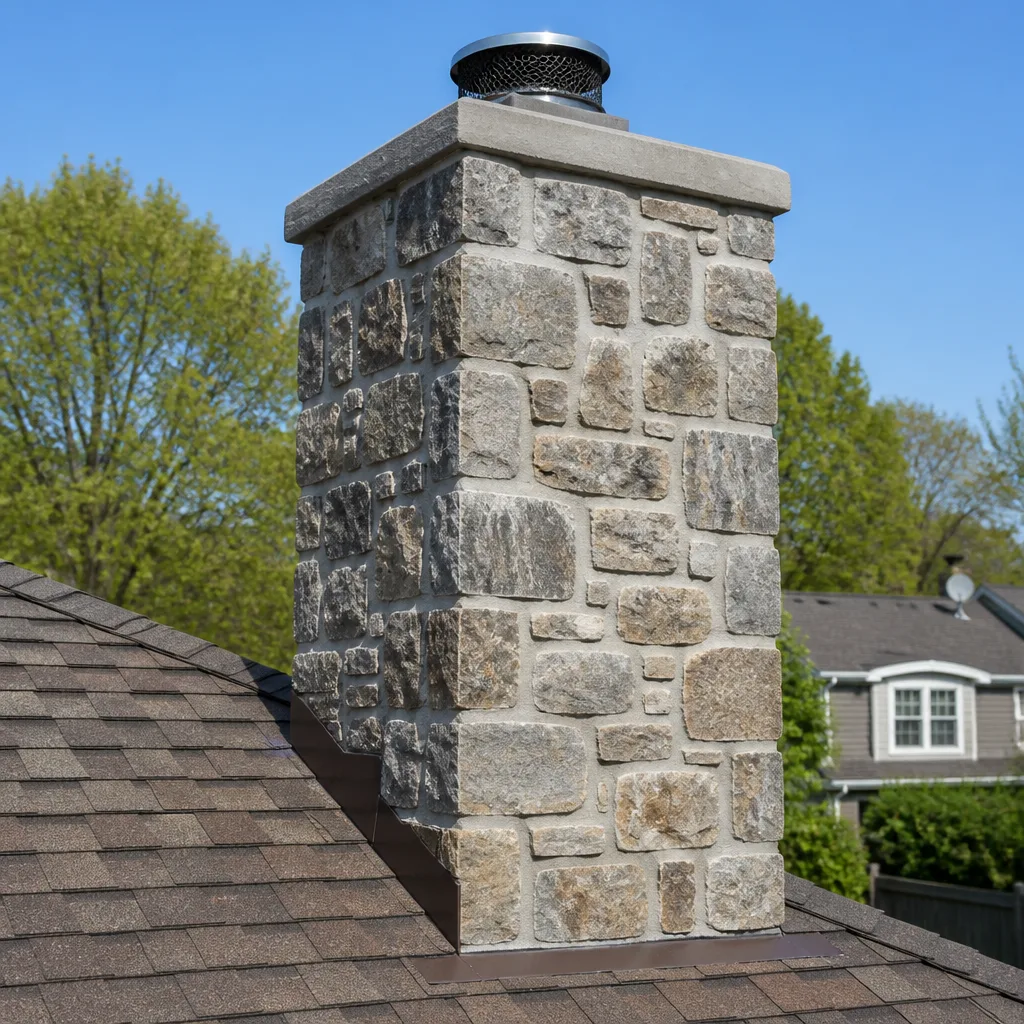 Masonry repair
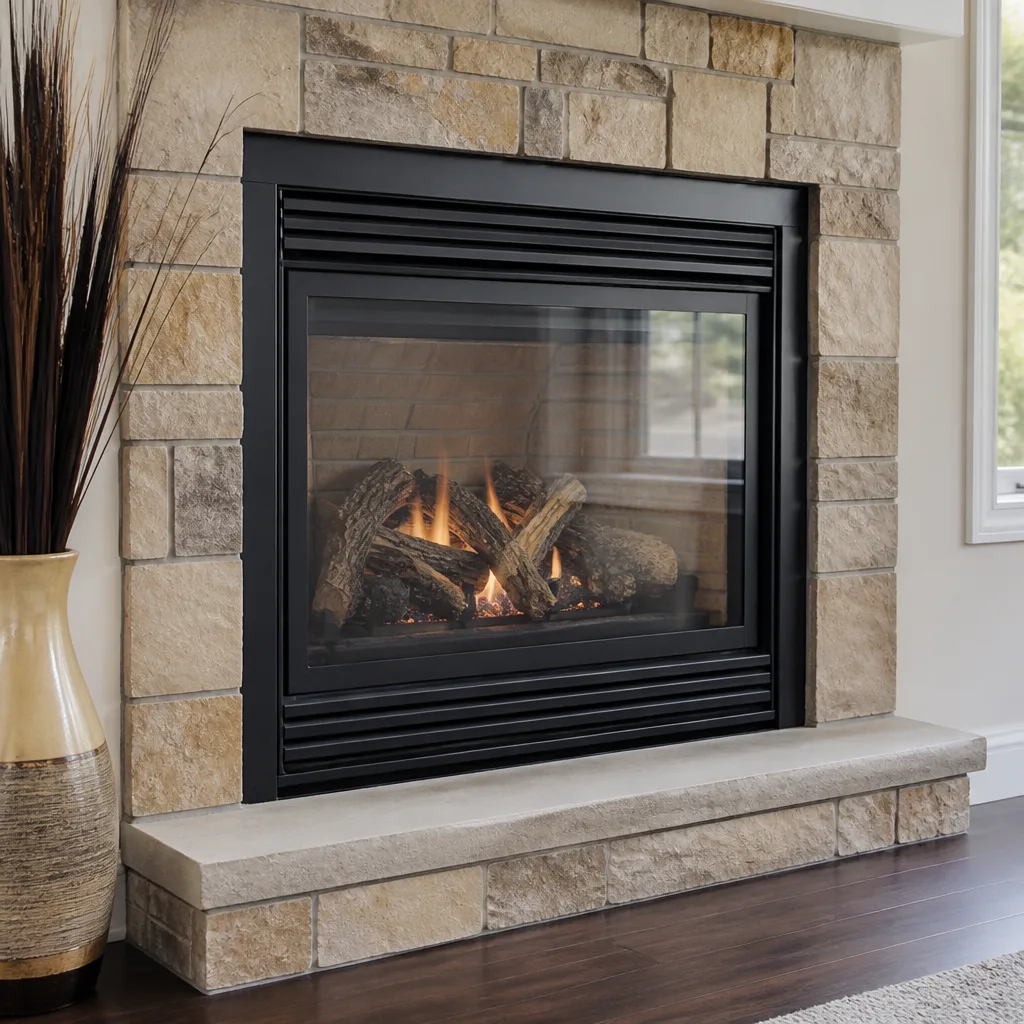 Gas fireplace service
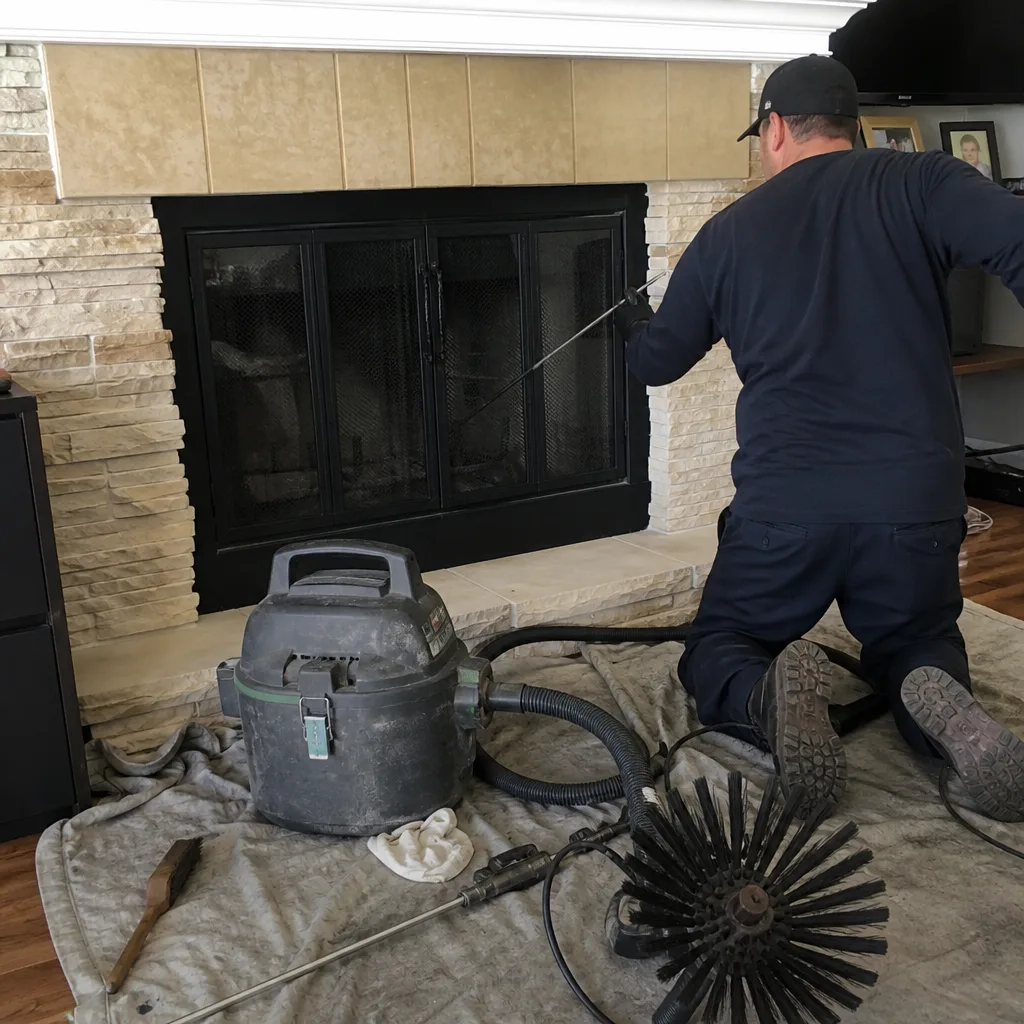
Level 1 sweep and inspection to the NFPA 211 annual standard - flue, crown, cap, and flashing checked and photographed
Chimney sweep logs do not sweep chimneys. They loosen some creosote - which then falls where a brush and vacuum still have to collect it.
Chimney Cleaning Warning Signs: A Riverside Homeowner’s Reference Guide
Here’s something most chimney guides won’t tell you: the two most common warning signs Riverside homeowners report to us are a white chalky stain on the exterior brick and a smoke smell that lingers long after the fire is out. One of those can wait until your next scheduled cleaning. The other means you should not light another fire until a technician looks at the flue. This guide and our complete guide to chimney cleaning in Riverside exist because nobody should have to guess which is which. We’ve organized what you’re likely to see into three clear categories: watch and document, schedule within 30 days, and do not use the fireplace. By the end, you’ll know exactly how to describe what you’re seeing, what it actually means for your Riverside home, and what a fair response looks like, whether that’s a phone call or a few more weeks of enjoying your fireplace.
Quick Answer
The warning signs that matter most for a Riverside chimney fall into three tiers: white staining (efflorescence), rust streaks, and minor spalling brick generally mean moisture is present and can be monitored or scheduled for repair within 30 days. A strong campfire-like smell that appears when the fireplace hasn’t been used in days, visible glossy tar-like buildup on the damper, or smoke entering the living space means you should stop using the fireplace immediately and have the flue assessed. Most standard chimney sweeps in the Riverside area run between $179 and $249, while repairs like liner work or crown sealing vary based on what the camera inspection shows; see our Chimney Sweep Maintenance Checklist for Riverside Homeowners for what to expect.
Styles & brands we work with
Table of Contents
- The Three-Tier Warning Sign System: How to Categorize What You’re Seeing
- Efflorescence, Spalling Brick, and Rust Streaks: Reading Water Damage on Riverside Chimneys
- The Smell Test: Normal Post-Burn Odor vs. The Campfire-in-Summer Signal
- Monthly Checks for Homes with Kids and Pets: What to Look at Near the Firebox
- How to Describe a Warning Sign Over the Phone So the Right Crew Shows Up
- Common Mistakes to Avoid
- When to Call a Professional
- Frequently Asked Questions
The Three-Tier Warning Sign System: How to Categorize What You’re Seeing
Most chimney warning sign lists dump every symptom into one undifferentiated pile and let the reader assume the worst. That’s not useful, and honestly, it’s not honest. A homeowner in Riverside who sees a few hairline cracks in the firebox mortar does not need the same response as someone whose damper is coated in shiny black tar. So we use a simple three-tier system, and we recommend you do the same. It turns an anxious moment into a clear decision.
Tier 1: Watch and Document
These signs indicate a chimney system doing normal work, with perhaps the earliest hint of something to keep an eye on. No immediate action is required. Document what you see with a phone photo, note the date, and check again in a month or two.
- Early efflorescence: A faint white haze on a small section of exterior brick, often appearing after heavy rain and disappearing during dry Riverside summers. This is moisture moving through the masonry and depositing salt. It’s cosmetic at this stage, but worth watching. If it spreads or thickens, it moves to Tier 2.
- Mild creosote dust: A thin, flat black or brown dust coating on the damper plate that brushes off easily. This is normal after a season of wood burning. If you can wipe it with a finger and it’s powdery, not sticky, it’s stage-one creosote and expected.
- Seasonal animal noise: Occasional chirping or scratching from the chimney in spring. Birds sometimes nest on the cap rather than in the flue. Document it. If noise persists beyond a few weeks, schedule an inspection to check for an actual nest in the flue, but this is not an emergency.
- Small hairline cracks in firebox mortar: Cracks thinner than a dime that haven’t changed in months. Firebrick and refractory mortar expand and contract with heat cycles. Riverside’s temperature swings between cool winter mornings and warm afternoons can produce these, and they’re often stable for years.
Tier 2: Schedule Within 30 Days
These signs indicate a process that is actively degrading the chimney and will get worse if ignored through another burn season. You don’t need to stop using the fireplace tonight, but you should put a reminder on your calendar and book an Chimney Inspection in Riverside within a month.
- Spalling brick: Brick faces flaking off, leaving pitted surfaces or piles of brick dust and small chips at the base of the chimney. This is freeze-thaw damage and Riverside gets enough cold snaps in the La Sierra and Woodcrest hills to cycle water into ice inside the brick. Left alone, spalling deepens and compromises the structure.
- Visible rust streaks on the cap or chase cover: Orange or brown staining running down from the top of the chimney. The metal cap or the flashing is corroding. A rusted-out cap lets rain straight into the flue, and Riverside’s occasional heavy winter downpours accelerate the damage.
- Damper that’s hard to move or doesn’t seat fully: A damper that creaks, sticks, or leaves a visible gap when closed. The damper controls draft and keeps conditioned air from escaping. A warped damper also lets birds and debris in. It’s a repair that’s straightforward to address, but it does require a technician.
- Persistent mild smoke smell in the firebox, even when cold: A faint campfire note that hangs around the fireplace opening but doesn’t fill the room. This can indicate creosote or soot buildup in the smoke chamber or early signs of a draft problem. Schedule a sweep.
Tier 3: Do Not Use the Fireplace
These signs mean the chimney is not safe to operate. Stop using the fireplace, keep the damper closed, and call a professional before lighting another fire. This is the tier where being honest matters. None of the following is a “wait and see” situation.
- Strong campfire-in-summer smell: A pronounced, unmistakable campfire odor in the living room when the fireplace has been cold for days. This signals stage-two or stage-three creosote, the tarry, baked-on form that is a fuel source for chimney fires. We’ll cover this more in the smell test section below.
- Glossy, tar-like creosote on the damper or smoke chamber walls: Shiny black buildup that looks like burnt cooking oil or road tar. It’s sticky, not powdery. This is concentrated fuel attached to your flue walls, and burning with it present is asking for a chimney fire.
- Smoke entering the living space during a fire: Any visible smoke rolling into the room while the fire is burning. This means the chimney is not drafting properly, the flue is obstructed, or there’s a blockage. Smoke in the living space also means carbon monoxide can build up. The fireplace should not be used.
- Debris falling into the firebox: Pieces of brick, mortar, or metal dropping from above. This indicates structural deterioration inside the flue. If chunks are falling, the liner or smoke chamber is actively shedding material.
- Visible cracks in the chimney exterior wider than a quarter inch: A wide crack, especially one running diagonally or horizontally through the brickwork, can indicate settlement or severe freeze damage. The chimney’s structural integrity is in question.
The point of this system is to remove the guesswork. Most of what Riverside homeowners call us about falls into Tier 1 or Tier 2, which means they have time to make a decision without a sales pitch. And when something is Tier 3, we say so plainly. That’s what a written price and a clear recommendation look like in practice.
Efflorescence, Spalling Brick, and Rust Streaks: Reading Water Damage on Riverside Chimneys
Water is the enemy of every masonry chimney, and Riverside’s climate gives it a particular pattern. We get long dry spells punctuated by sharp winter rain, and in the higher-elevation neighborhoods like Canyon Crest, Hawarden Hills, and the hills around Lake Mathews, overnight temperatures drop low enough to freeze water that has soaked into porous brick. That cycle, soak and freeze, soak and freeze, is what turns a hairline crack into a spalled brick face in two or three winters. Here’s how to read the three most common moisture warning signs.
Efflorescence: The White Stain
Efflorescence looks like someone smeared white chalk or salt on the outside of the chimney. It’s not mold, and it’s not a chimney fire. It’s mineral salts left behind as water migrates through the masonry and evaporates on the surface. The water dissolves salts naturally present in the brick, mortar, or even the soil around the footing, carries them out, and leaves them behind. This tells you two things: water is getting into the brick, and it’s finding its way back out. In Riverside, efflorescence usually appears a few days after a heavy rainy spell, and it often fades or washes away during the dry months. When it returns season after season and spreads further up the chimney, it’s a sign the masonry is regularly saturated. The water source may be a cracked crown, missing or degraded mortar cap, failed flashing at the roofline, or rain driving directly into the flue because the cap has rusted away. A chimney sweep can pinpoint the entry point during a standard inspection.
Spalling Brick: When the Face Falls Off
Spalling is what happens when water inside the brick freezes and expands, fracturing the brick’s surface. You’ll see flaking, pitting, and small piles of brick chips on the roof or at the chimney’s base. The brick’s hard outer face, called the fire skin, breaks away and exposes the softer interior to even more water. In Riverside, spalling is most common on older masonry chimneys in the downtown core, the Wood Streets, and Magnolia Center neighborhoods, where chimneys may be sixty to eighty years old. At that age, a few missing faces are almost expected. The repair is repointing the damaged mortar joints and replacing the spalled bricks before the damage spreads into the chimney’s core. If the flue liner behind that brick is also cracked, which a camera inspection will show, you may be looking at a Fireplace Repair in Riverside that includes sealing or relining. Left untreated, spalled sections can grow large enough to compromise the chimney’s structural stability, and in Riverside’s winter wind events, a loose brick falling from a rooftop chimney is a serious hazard.
Rust Streaks: The Cap and Flashing Tell
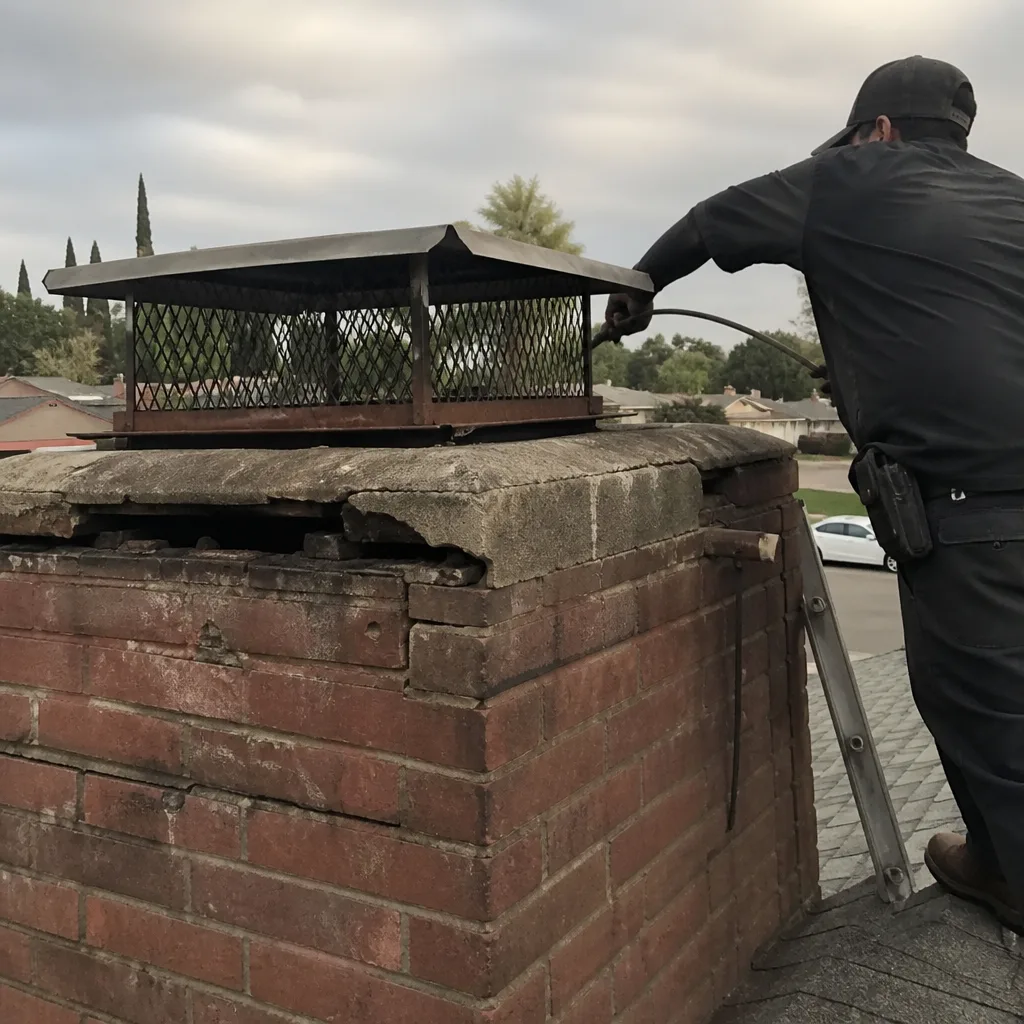
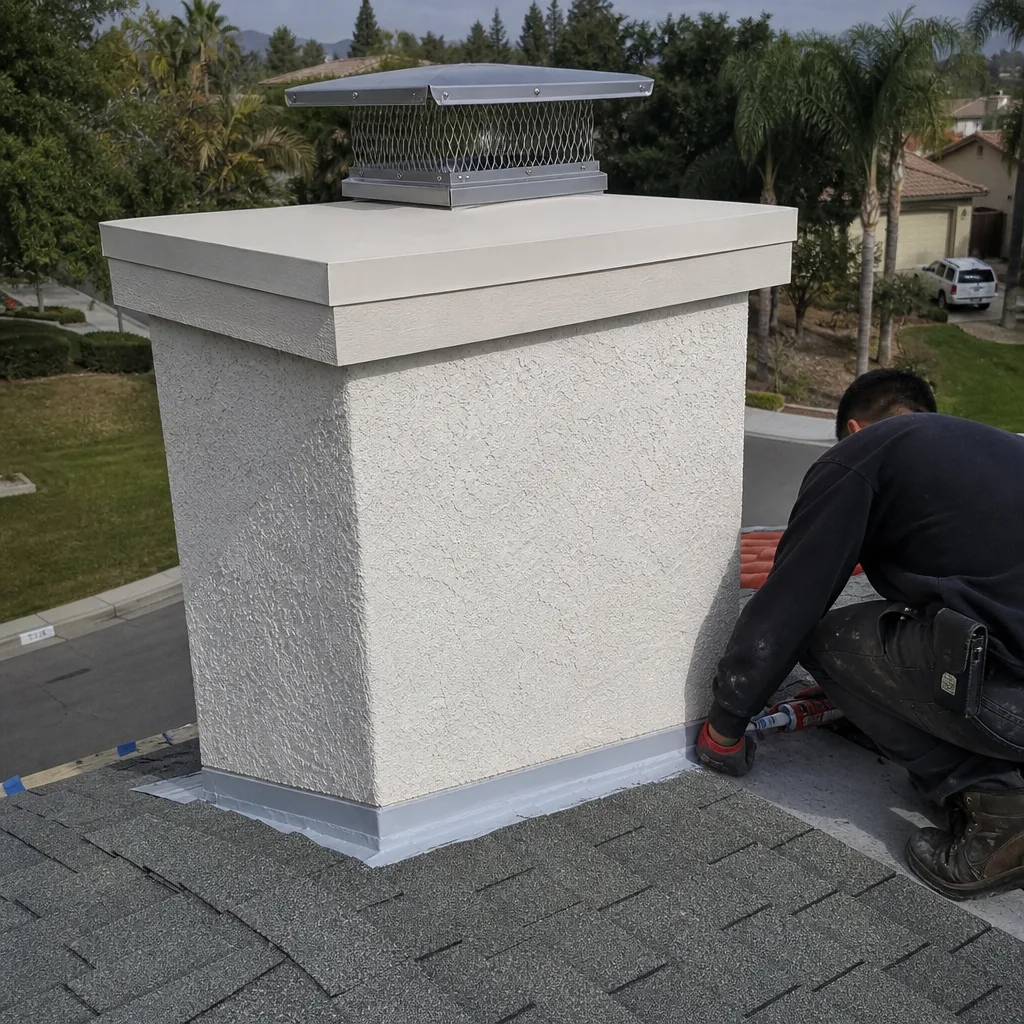
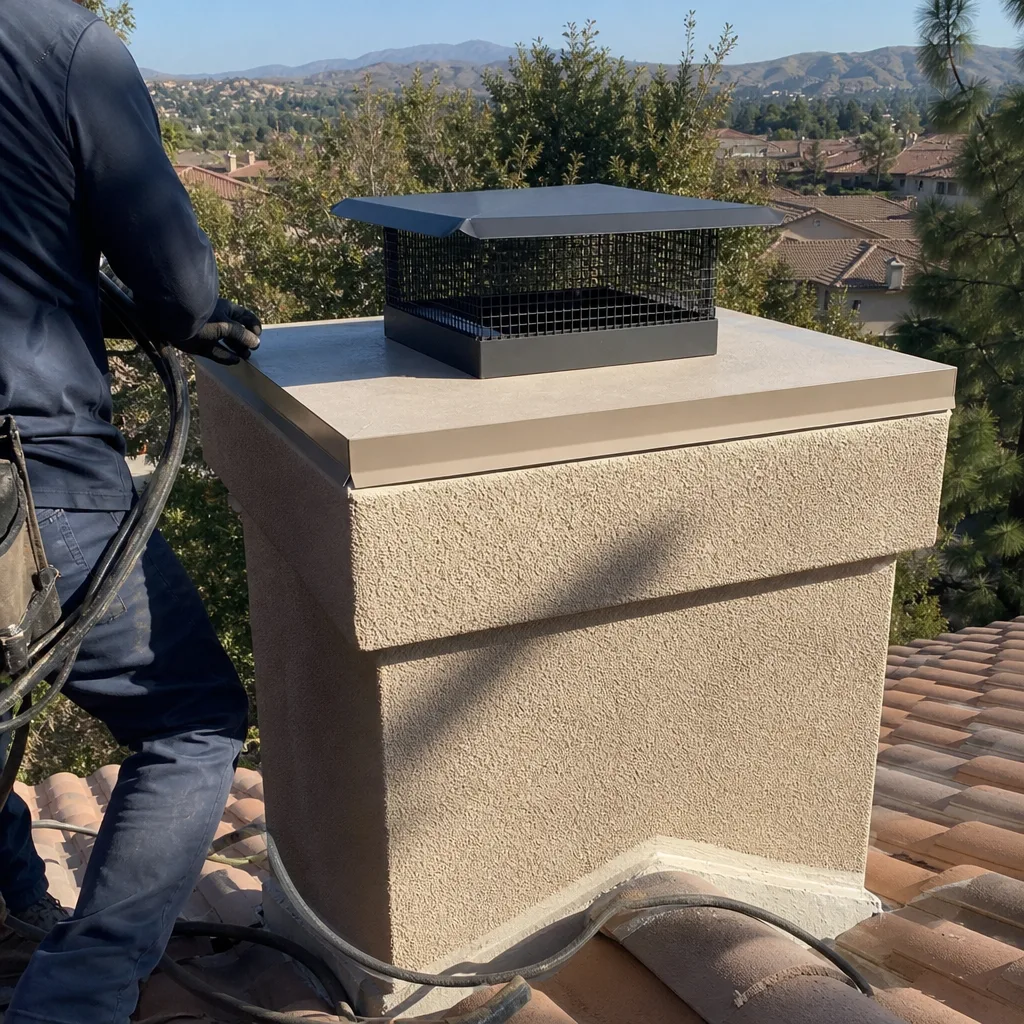
Rust stains running down the chimney’s exterior usually trace back to the metal cap at the top or the flashing where the chimney meets the roof. The cap is a metal lid with mesh sides that keeps rain, animals, and debris out of the flue. A standard cap lasts fifteen to twenty years in Riverside’s mostly dry climate, but once moisture and creosote exhaust eat through the welds, rust begins and the cap starts letting water in. Flashing, the metal that seals the seam between the chimney and the roof, can also fail. We see this frequently in Riverside homes with Spanish tile roofing where flashing was not properly re-secured after roof work. A rust streak is not an emergency by itself, but it is a map: it shows the water path from a failing metal component into the masonry. The fix is often a cap replacement or flashing repair, both of which are far less expensive than waiting for the water to rot the roof decking or destabilize the chimney crown.
The common thread is that water intrusion never fixes itself. Riverside’s dry spells can lull homeowners into thinking the problem went away, but the damage is cumulative. Each wet winter moves the chimney closer to a structural repair. A camera inspection and a moisture check are the two tools we use to map exactly where the water is getting in, so the repair you pay for actually solves the problem the first time. That’s the difference between a patch and a proper fix.
The Smell Test: Normal Post-Burn Odor vs. The Campfire-in-Summer Signal
Of all the sensory warning signs, smell is the one Riverside families notice most often and understand least. A chimney is supposed to smell, a little, right after a fire. A clean, properly functioning fireplace will carry a faint wood-smoke scent for a day or two after the last burn, especially when the damper is open or the weather is humid. That’s normal. Then there’s the smell that is not normal, and learning to distinguish the two will tell you more about your chimney’s internal surfaces than any visual check from the living room.
Normal Post-Burn Odor
A faint, fading wood-smoke scent that is strongest in the twenty-four hours after a fire and then subsides. It’s most noticeable when you’re standing right at the hearth opening. On damp Riverside winter mornings, you may smell it a little more strongly because water vapor in the air carries odor molecules. The key is that it fades. It doesn’t invade the room. It doesn’t show up in the summer.
The Campfire-in-Summer Signal
Now imagine you’re walking through your living room on an August afternoon in Riverside. The fireplace has not been used since March. And yet, there’s a distinct campfire smell, like someone built a bonfire in the corner of the room. Not a faint note. A present, unmistakable odor that gets stronger when the house is closed up for air conditioning. That smell is the signature of stage-two or stage-three creosote.
Creosote builds up inside the flue as smoke cools and condenses on the chimney walls. The first stage is fine dust. The second stage is flaky, crunchy, dark brown or black buildup. The third stage is the tarry, glossy, hardened deposits we described in Tier 3. Stage-two and stage-three creosote have a strong, persistent odor that seeps into the living space as the flue warms and cools with outdoor temperature changes. A hot Riverside afternoon heats the chimney, the creosote off-gases, and the smell pours down through an open or leaky damper. If you smell campfire in the middle of summer, the flue has a significant creosote problem, and it should be swept before the next fire. The good news: a full Chimney Sweep in Riverside removes that material and the smell goes with it. We also recommend checking the damper seal, because a damper that doesn’t close tightly compounds the odor problem even after cleaning.
Other Smells and What They Mean
- Acrid, chemical, or plastic-like smell during or after a fire: Something other than seasoned wood is burning. This could be trash, treated lumber, or a foreign object in the flue. Stop using the fireplace and schedule a camera inspection.
- Musty, damp-earth smell: Moisture and possibly organic material in the flue. Often this accompanies a failed cap that let rain and leaves in. Tier 2: schedule an inspection.
- Rotten-egg or sulfur smell when the fireplace is not in use: This may indicate animal matter decomposing in the flue, or in rarer cases a draft issue pulling sewer or crawlspace gases into the home. Do not use the fireplace and call for an inspection.
- Metallic or oily smell when the fireplace heats up: Could be a new appliance burn-off, but on an existing chimney it often traces to rusting components or debris in the smoke chamber.
For families with children and pets, the smell test matters for another reason. A persistent chimney odor isn’t just unpleasant. It’s a sign that indoor air quality is being affected by whatever is inside the flue. When we sweep a Riverside chimney, we protect the living space during the process, shoe covers and drop cloths down, and we use pet-safe sweeping compounds where there’s a choice. The family shouldn’t have to trade a clean chimney for a chemical-smelling living room.
Monthly Checks for Homes with Kids and Pets: What to Look at Near the Firebox
You don’t need special tools or any technical training to spot early warning signs around the firebox. A simple monthly visual check, something you can do in three minutes while the kids are finishing breakfast, will catch most problems before they escalate. Here’s what to look at, in Riverside, where families use their fireplaces from roughly November through March.
- Look at the floor of the firebox. Is there loose brick, cracked refractory panels, or a buildup of ash deeper than an inch? Ash depth matters because a fire burning on top of deep ash doesn’t draw air as well, which increases smoke and creosote production. Also, a cracked firebox floor panel can expose the framing beneath the firebox to heat. Those panels are replaceable.
- Look up at the damper. If you can see the damper plate, check for a black, tar-like glaze or flaking crust. Powdery soot is normal. Shiny or crusty buildup is not. Also try moving the damper handle through its full range. It should glide and seat with a soft metallic thunk. Stiffness, grinding, or a visible gap when closed means the damper needs service.
- Look at the firebox walls. Refractory brick panels line the sides and back of the firebox. They should be solid and sound, with no panels bowed inward, no gaps between panels wider than a pencil lead, and no missing chunks. In older Riverside homes, especially around the Victoria and Grand neighborhoods, these panels may be original and well past their service life.
- Sniff near the hearth, not during or right after a fire. Give a gentle sniff at the firebox opening when the fireplace is cold. A faint soot note is fine. A strong campfire, damp, rotten, or chemical smell is not. This single check catches stage-two creosote, water entry, and animal intrusion a visual check might miss.
- Check the area around the hearth and mantel. Look for dark smudges on the wall above the fireplace opening, soot staining on the mantel face, or discoloration on the ceiling above the chimney chase. These indicate smoke roll-out, which means the draft is not pulling properly. For homes with kids, smoke roll-out matters because it puts particulates into the same air the family breathes during fire season.
- Check the hearth for things that shouldn’t be there. Small piles of brick dust, metal flakes, or insect wings. Brick dust points to spalling or deteriorating mortar inside the chimney. Metal flakes may come from a degrading damper assembly or cap. Insect wings, especially termite wings, are a reminder that moisture behind the chimney can attract pests. Note anything and mention it on your next service call.
None of these checks requires climbing on the roof or putting your head in the flue. We recommend them monthly during burn season and once at the start of fall before the first fire. Write down what you see, even in a notes app, and you’ll have a baseline for comparison. That kind of documentation is exactly what helps a technician prioritize when you do call.
How to Describe a Warning Sign Over the Phone So the Right Crew Shows Up
When you call a chimney company in Riverside about a problem, the person on the phone is trying to figure out what kind of job this is: a routine sweep, a repair, or something urgent. The better you describe what you’re seeing, the more likely the right technician with the right equipment shows up the first time. Here’s the framework we use at Kindling Chimney Riverside when we take calls, and it works just as well for you describing the problem.
- State where the sign is. Inside the firebox? On the exterior brick? At the top of the chimney? On the ceiling above the fireplace? Location narrows the problem enormously. “There’s white staining on the outside brick about halfway up” tells us water is moving through the masonry. “There’s black crust on the damper” tells us a flue buildup problem.
- Describe the color and texture. White, chalky powder. Brown flaky crust. Shiny black tar. Orange rust streaks. Thin hairline crack versus a wide gap. Color and texture are how we distinguish efflorescence from spalling, stage-one from stage-three creosote, rust from soot staining.
- Describe the smell, if any. And be specific about when you smell it: only after a fire, or also in summer when the fireplace has been unused for months. The timing is as diagnostic as the odor itself.
- Describe what happens when the fireplace is in use. Does smoke curl into the room? Does the fire struggle to light? Is there a draft coming down the chimney when there’s no fire? These are draft system symptoms and they point to something different from a visual-only problem.
- Mention anything you’ve noticed change. “It started after the January rain.” “It got worse after the roof was replaced.” “We heard scratching in March.” Changes over time tell us whether this is an active failure or a stable condition.
- Mention children, pets, or health concerns. If someone in the home has asthma, allergies, or respiratory sensitivity, say so. It doesn’t change the chemistry of the problem, but it does affect how we protect the living space during the work, and it tells us the indoor air quality piece matters more than usual for your family.
A good phone call takes three or four minutes, and it means the technician arrives understanding what they’re looking for. At Kindling Chimney Riverside, a live person answers the phone twenty-four hours a day, seven days a week. No voicemail trees, no callbacks days later. The person answering knows enough to route the call correctly and ask the right follow-up questions so the crew arrives prepared. That first conversation is also where we explain the written price: you get a number before any work starts, every time, with no on-the-spot pressure.
Common Mistakes to Avoid
- Ignoring a Tier 1 sign until it becomes Tier 3. A little efflorescence costs a few hundred dollars to address at the source. A spalled and structurally unstable chimney crown costs real money. The earlier you catch it, the smaller the repair. In Riverside’s freeze-thaw seasons, the gap between Tier 1 and Tier 3 can be one wet winter.
- Burning fires despite a campfire smell in summer. That smell means the flue is loaded with stage-two or stage-three creosote. Lighting a fire is putting a flame in a tube lined with fuel. It’s the single most common avoidable danger we see in Riverside chimneys.
- Painting over efflorescence or spalling without fixing the water source. Paint seals moisture inside the brick, which accelerates freeze damage. It hides the symptom and worsens the disease. The water entry point must be fixed first, then the masonry repaired.
- Assuming the chimney doesn’t need service because it’s only used a few times a year. Light use still produces creosote, and Riverside’s rainy season works on the exterior masonry even when no fire is burning. An annual inspection is cheap compared to a liner replacement.
- Calling a roofer instead of a chimney company for flashing or cap problems. Roofers know roofing, and some do flashing well, but a chimney cap, crown, and flue are a combined system. A chimney technician can assess all of it at once. We’ve seen Riverside homeowners pay twice because a roofer fixed the flashing and missed the cracked crown three feet above it.
- Not checking the damper for a proper seal. A damper that doesn’t close fully lets conditioned air escape all summer and lets chimney odors into the home year-round. It’s a simple fix that pays for itself in comfort and energy costs.
- Waiting until fall to schedule a sweep. Riverside’s chimney service demand spikes every October. Families can wait weeks for an appointment during the busy season. The best time to schedule is late summer, when there’s no rush and the chimney has had months to dry out. Planning ahead means a clean, inspected fireplace ready on the first cold night.
When to Call a Professional
Call a professional whenever you identify a Tier 3 sign, any time smoke enters the living space, or if you’re in Tier 2 and want a clear-eyed answer on what the repair actually costs. You should also call if you’ve just bought a home in Riverside and have no service history for the chimney, or if it’s simply been more than a year since the last sweep. A camera inspection removes the guesswork: you see exactly what the flue looks like inside, and you get a written recommendation, not a sales pitch. If you’re weighing whether to tackle upkeep yourself, our DIY vs Professional Chimney Cleaning guide lays out the trade-offs clearly. Kindling Chimney Riverside offers free estimates in Riverside, call (831) 218-8547. Every job includes a written price before work begins, shoe covers and drop cloths, and a photo of the clean-up before the crew leaves.
Frequently Asked Questions
The most reliable signs are a campfire smell that persists when the fireplace is cold, visible glossy black buildup on the damper or firebox walls, smoke entering the room during a fire, or more than a quarter inch of soot accumulating on the firebox surfaces. If it’s been over a year since the last sweep, schedule one regardless, because Riverside’s varied burn habits mean buildup varies widely from home to home. Call (831) 218-8547 to book a sweep at a written price before work begins.
A dangerous chimney usually shows one of these: shiny, tar-like creosote coating the inside of the flue, a strong campfire smell in summer, visible smoke roll-out during fires, wide cracks in the exterior masonry, or chunks of brick and mortar falling into the firebox. Any one of these means the fireplace should not be used until a professional has assessed it. We’ve seen all of them in Riverside homes, and each has a straightforward fix once properly diagnosed.
Most standard chimney sweeps in Riverside run between $179 and $249, depending on the flue type, accessibility, and how much creosote has built up. If the flue hasn’t been cleaned in several years, expect the higher end of that range because the work takes longer. Every sweep at Kindling Chimney Riverside includes a written price before work starts, so there’s no surprise at the door.
Yes. A chimney fire burns at temperatures that can crack flue liners, warp the damper, and spread heat to framing members near the chimney. The damage may not be visible from the living room, which is why a professional inspection after any chimney fire is essential. Even a small chimney fire can compromise the flue system, and the repair is far less expensive when caught immediately.
You need a new liner or a liner repair if a camera inspection shows cracked flue tiles, gaps between tiles, or deterioration that allows heat and gases to escape the flue. If a company recommends liner work without showing you camera footage of the problem, get a second opinion. At Kindling Chimney Riverside, we don’t recommend liner work unless we can show you exactly what the camera sees, and we use professional-grade liner materials like DuraFlex and HeatShield because a liner repair should last, not just get the job closed out.
Once per year for a wood-burning fireplace is the standard recommendation, even if you only burn a couple dozen fires per season. Riverside homes that burn wood regularly from November through March typically accumulate enough creosote in one season to warrant an annual sweep. Gas fireplaces can go two to three years between inspections but should still be checked regularly for venting issues and dust buildup on the logs and burner.
The Bottom Line
Your chimney talks to you, and most of what it says is perfectly calm. A little white staining, a bit of brick dust, a faint smoke note after a fire, these are signs to watch, document, and mention at your next service. A persistent campfire smell in summer, smoke rolling into the room, or glossy tar in the flue, those are signs to stop using the fireplace and call a professional. The whole point of this guide is to put you in control of that decision. You don’t need to be a chimney expert to know the difference anymore. You just need to know which tier you’re in, and what to do about it. For more guides & resources, a written price, and a straight answer on anything you’re seeing, call Kindling Chimney Riverside at (831) 218-8547. We’re part of the Cedarwell family of companies, established in 2003, and we serve Riverside with the same calm, specific, no-pressure approach we’d want for our own homes.
Written by Danny Cortes, Owner at Kindling Chimney Riverside, serving Riverside since 2003.
See the difference
 Before
 After
After Before
 After
After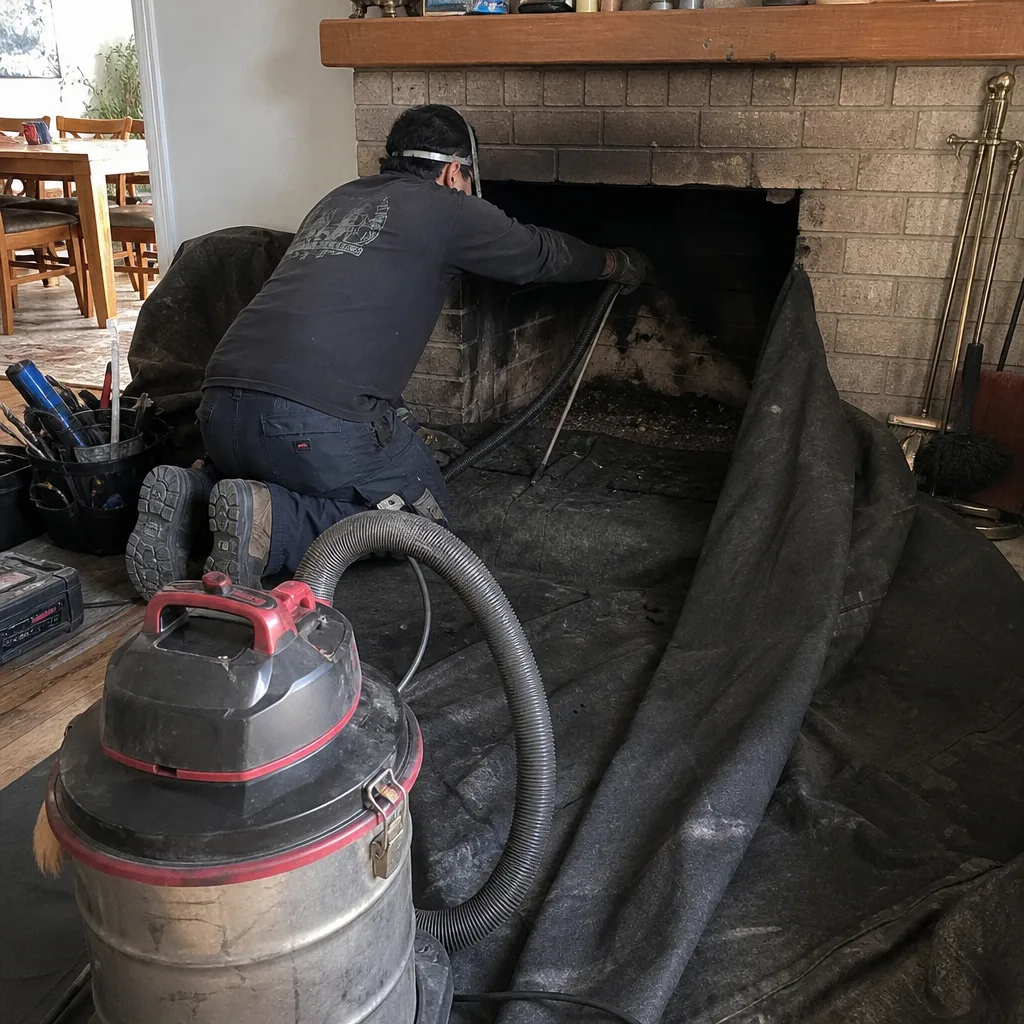 Before
 After
After